
A NVIDIA Board Member Just Sold $186 Million of Stock in One Day on a Form 4
Director Mark Stevens sold 884,999 NVIDIA shares for about $186 million on June 18, 2026. NexusAlert flagged it High while routine insider sales stayed Low.
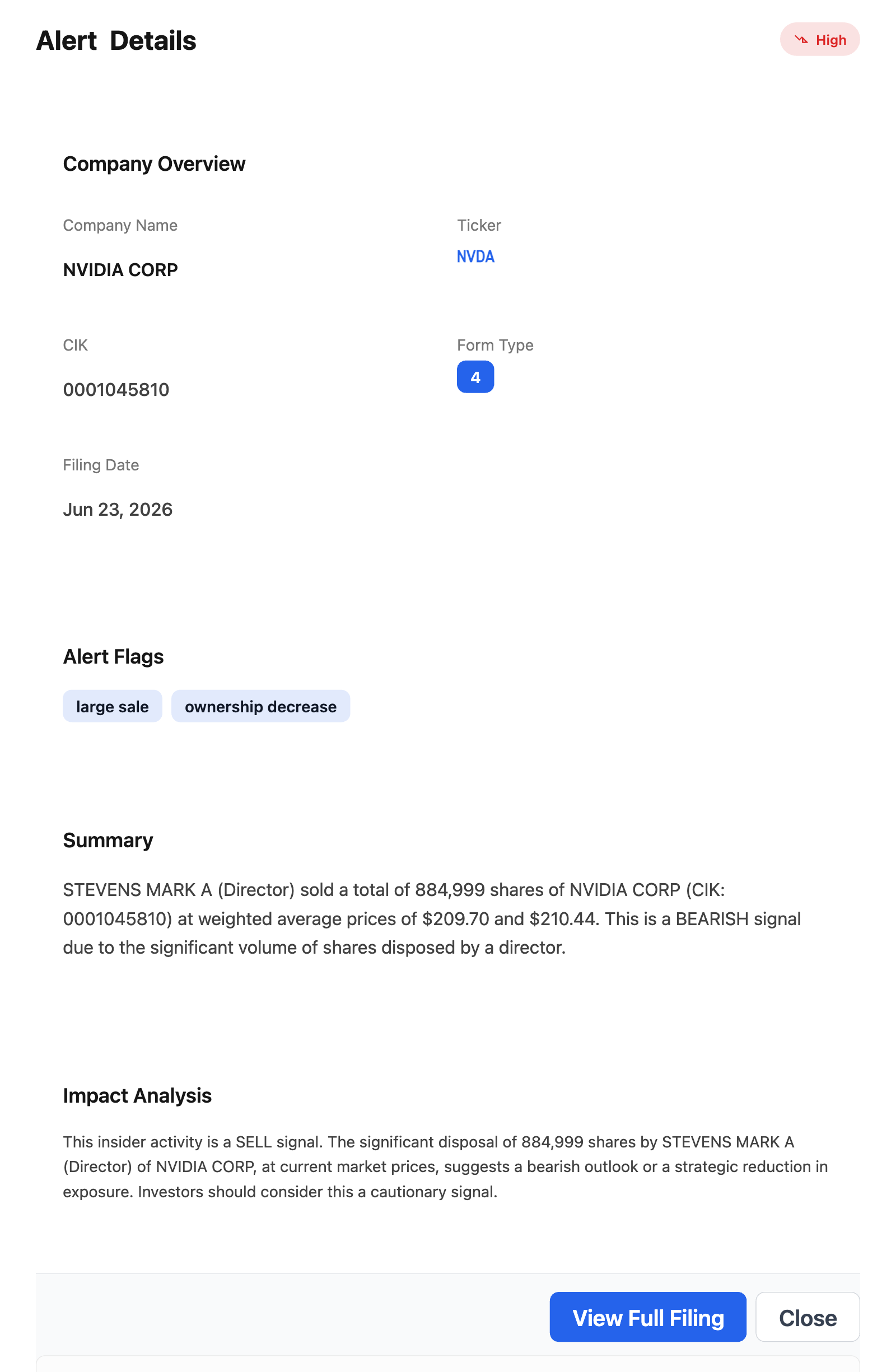
A board member of the most valuable company on the planet just sold a $186 million slug of its stock in a single session, and NexusAlert caught it the day the filing posted. On June 18, 2026, Mark A. Stevens, a longtime NVIDIA Corporation (NASDAQ: NVDA) director and Sequoia Capital partner, disposed of 884,999 shares for roughly $186 million at weighted-average prices of about $209.70 and $210.44. The Form 4 hit EDGAR on June 23, and NexusAlert tagged it High severity while four other NVIDIA insider transactions in the same window stayed Low.
What the Form 4 Actually Shows
This was a genuine open-market sale, coded S on the Form 4, not a routine sweep to cover taxes. The shares were sold in two blocks at weighted-average prices of roughly $209.70 and $210.44, held indirectly through the Third Millennium Trust, for which Stevens and his wife serve as co-trustees. The two blocks total $186 million at a blended price just above $210.
The size is the headline, but the context matters more. Stevens still controls 31,768,422 NVIDIA shares across his direct holdings and two family trusts after the sale. At roughly $210 a share, that remaining stake is worth more than $6.6 billion. He sold a slice, not the position.
NexusAlert flagged the alert with large sale and ownership decrease, and its AI read the disposition as a bearish signal “due to the significant volume of shares disposed by a director.” That is the platform doing its job: reading the filing, pulling the numbers, and putting a severity on it so you do not have to open EDGAR yourself.
Why This Is the Only NVIDIA Insider Who Actually Sold
Here is the part the headline number hides. NVIDIA insiders file constantly, and on June 23 a whole cluster of them did. But look at the transaction codes, not just the dollar signs.
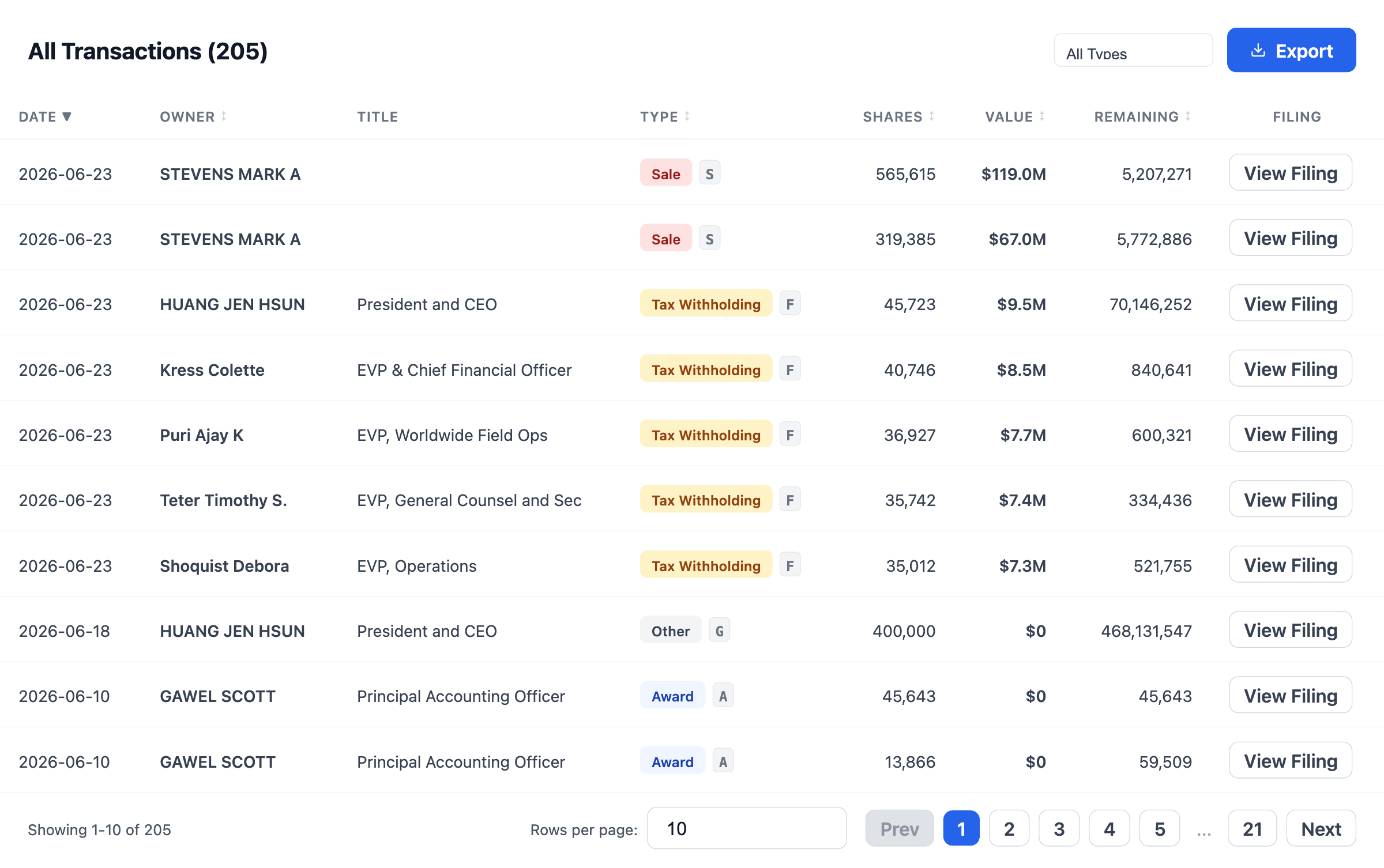
The other June 23 lines are not open-market sales at all. The disposals tied to CEO Jensen Huang (45,723 shares), CFO Colette Kress (40,746), and EVPs Ajay Puri (36,927), Timothy Teter (35,742), and Debora Shoquist (35,012) are all coded F, shares automatically withheld to cover taxes when restricted stock vested. That is payroll, not a vote against the company. Huang’s separate 400,000 share line on June 18 is coded G, a bona fide gift with $0 in proceeds. None of those is a decision to dump stock into the market.
Only the two Stevens blocks are coded S, real open-market sales, which is why NexusAlert flagged that filing High and left the rest Low. That is the entire point of reading the code. A raw “insiders sold X dollars” aggregate lumps tax withholding, a gift, and one genuinely large open-market sale into a single scary figure. Sorting the real sale from the payroll is the difference between a useful alert and a panic button.
So Is It a Red Flag for NVIDIA?
Not on its own, and it is worth being honest about why.
A director selling through a family trust is not the same as the operating bench heading for the exits. Stevens is a venture investor who has sat on NVIDIA’s board for decades, not a manager running the business day to day. Long-tenured directors and early backers trim concentrated positions for estate planning, diversification, and liquidity, and a sale of this size still left him with nearly 32 million shares. When the person selling keeps a multibillion-dollar stake, “insider dumps stock” is the wrong frame.
What gives this filing weight is volume and cadence, not the act of selling itself. A single 884,999 share block is large enough to register on its own, and it is not the only recent disposition tied to Stevens. The honest read is “a large holder is taking real money off the table into strength,” not “leadership has lost faith.” Those are different stories, and only the filing tells you which one you are looking at.
One director cashing out a slice is noise. A severity flag that separates it from four routine sales is the signal. Read the whole filing, not the dollar total.
The Lesson That Pays Off on Every Other Stock
The takeaway for retail investors is the one that travels. When you see “NVIDIA insiders sold hundreds of millions” in a feed, the useful questions are who sold, how big relative to what they still hold, whether it was planned or discretionary, and whether it stands out from the rest of the bench. The answer is in the Form 4, not the headline.
NexusAlert exists to surface exactly that the moment a filing posts: the severity, the flags, the AI summary that reads the document, and the side-by-side context that shows whether one sale is an outlier or just Tuesday. You can watch any ticker by Form 4 and see the High alerts float to the top while the routine ones stay quiet.
Create a free NexusAlert account and put the same filing-level read behind every name on your watchlist.
Sources
- NVIDIA director Mark Stevens’ trusts sell $186 million in stock (Investing.com)
- Nvidia Insider Sold Shares Worth $185,999,938, According to a Recent SEC Filing (MarketScreener)
- Mark A Stevens Takes Money Off The Table, Sells in NVIDIA Stock (Benzinga)
- NVDA SEC Filings and insider activity (StockTitan)
Prefer to own it outright? NexusAlert lifetime access is available for a one-time payment of $299 — no subscription, no recurring charges, all future Pro features included. Learn more →