
Lucid Filed an 8-K to Deny Bankruptcy. It Fell 16% Anyway.
Lucid filed an 8-K on July 14 calling bankruptcy rumors completely false. The stock closed down 16.2% at $4.62. Here is what the denial actually admits.
Lucid filed a legal document with the SEC for one reason: to tell you it is not dying
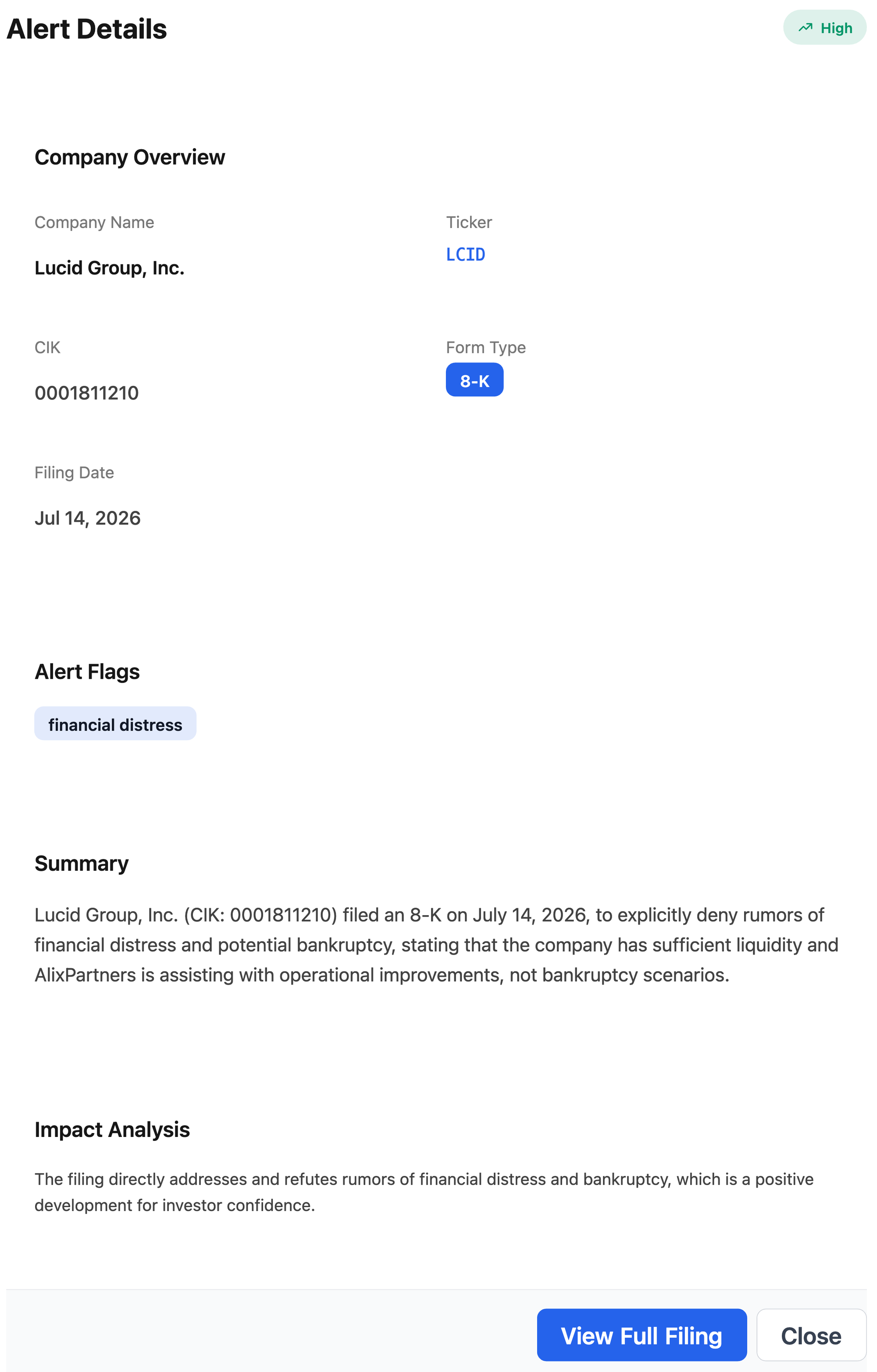
On July 14, 2026, Lucid Group filed an 8-K under Item 7.01 to call rumors about its liquidity and a potential bankruptcy “completely false.” The stock still closed at $4.62, down 16.2% on the day, after falling more than 50% at its worst point. NexusAlert tagged the filing High severity and filed it under one flag: Financial Distress.
Read that sequence again. The company said it was fine. The market marked it down anyway.
What the filing actually says
The 8-K is short and it is specific. Lucid states it has sufficient liquidity to carry operations well into next year, consistent with its most recent quarterly disclosures. It states it has not formed any special board committee to explore the scenarios described in the rumors. And it addresses AlixPartners directly, saying the restructuring adviser is assisting with execution and operations, and has not recommended bankruptcy to management or the board.
The rumor it answers came from a blog post reporting that AlixPartners had been asked to deliver findings to Lucid’s board, with scenarios that included going private or seeking Chapter 11 protection.
Every sentence in that denial is a sentence Lucid chose to put on the record under Regulation FD. That is the part worth slowing down on.
The misconception worth busting
A denial is not a rebuttal. It is a disclosure that the question got loud enough to require an answer.
Companies do not file 8-Ks to tell you nothing is wrong. They file them because staying silent got expensive.
Nothing in that denial is a lie, and nothing in it is proof. Lucid confirmed the two facts that made the rumor plausible in the first place: a restructuring adviser is in the building, and the company’s liquidity runway is measured in quarters, not years. “Sufficient liquidity well into next year” is a real statement. It is also a bounded one.
The bigger pattern the headline misses
Here is where the second read matters, because the lazy version of this story is “insiders are bailing.”
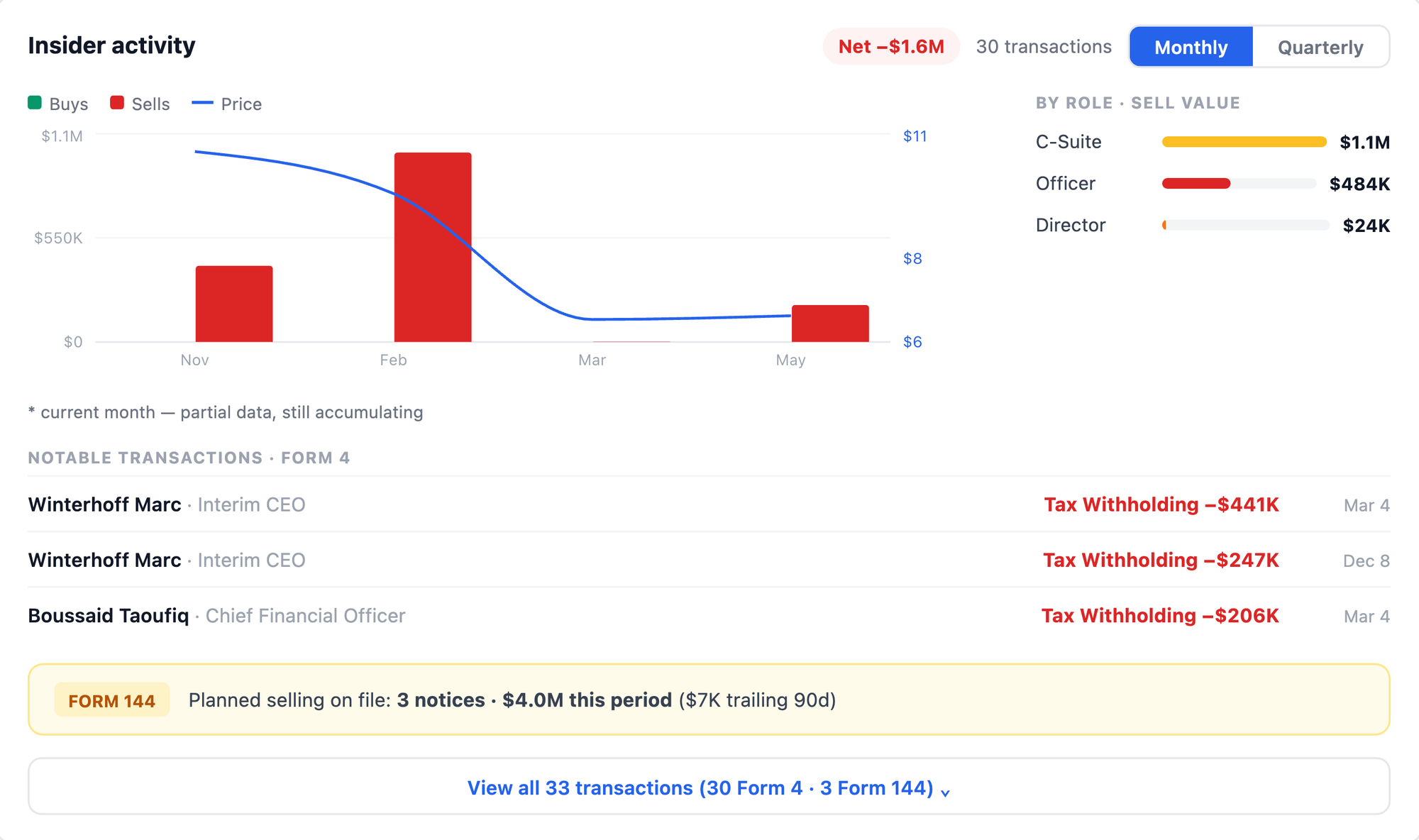
They are not. NexusAlert’s Company Dossier for $LCID shows insider net flow of -$1.6M across 30 transactions, and on a fast scan that looks like management heading for the exit. It is not. Every notable Form 4 on the page is labeled Tax Withholding: Interim CEO Marc Winterhoff at -$441K on March 4 and -$247K on December 8, and CFO Taoufiq Boussaid at -$206K on March 4.
Those are shares withheld automatically to cover taxes when equity vested. Nobody chose to sell. The Dossier scores it honestly: Insider Conviction comes back not rated, because there were zero discretionary transactions in twelve months. There is no insider signal here in either direction. The bear case for Lucid is real, and it is not an insider story.
What was already true before the rumor
The rumor moved the stock. The scores did not move at all, because they were already there.
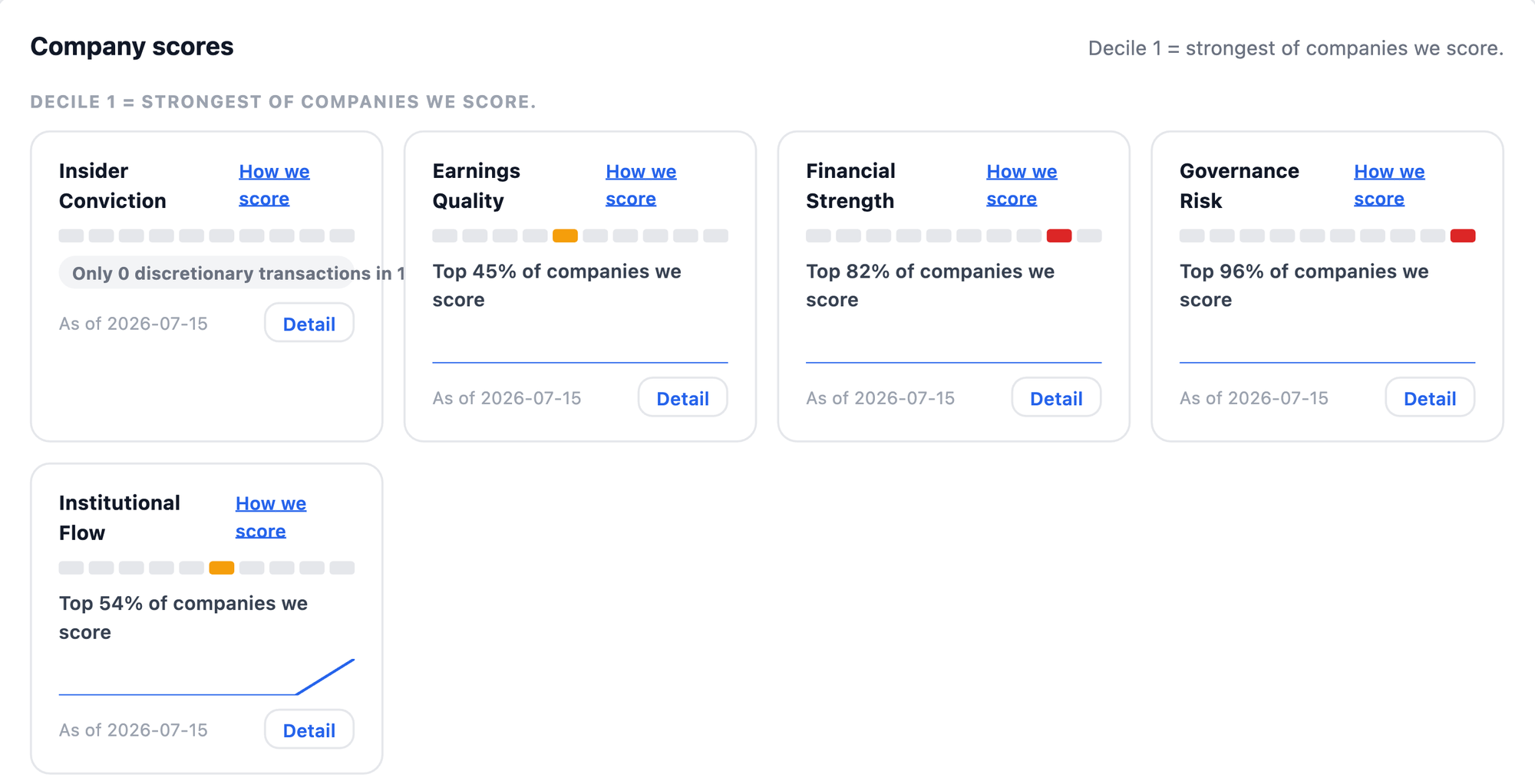
On a scale where decile 1 is the strongest of the companies NexusAlert scores, $LCID sits at decile 9 for Financial Strength and decile 10 for Governance Risk, the two weakest bands on the page. Earnings Quality is decile 5 and Institutional Flow is decile 6. None of that was published in response to the rumor. It was the standing read on the company on the morning the rumor landed.
So is Lucid going bankrupt?
That is not the claim, and anyone who tells you they know is selling you something.
Lucid has a sovereign wealth backstop in Saudi Arabia’s Public Investment Fund, and that relationship, not any press release, is the variable that actually decides this. The company says it has liquidity into next year. The auditors have not said otherwise. A rumor is not a filing.
But the market’s answer on July 14 was not “we believe you.” A stock that falls more than 50% intraday and still closes down 16.2% after an official denial is a market pricing the question, not the answer.
The lesson
When a company denies something in an 8-K, read what the denial admits.
Lucid’s denial confirmed the adviser, bounded the runway, and told you the board had been asked about scenarios serious enough to need a public “no.” The headline said “Lucid denies bankruptcy.” The filing said considerably more than that, and it took eleven paragraphs of primary source to find it.
That is the entire reason NexusAlert exists: to put the form type, the flag, the exact figures, the insider disposition codes, and the standing scores in front of you the moment a filing posts, instead of leaving you to reconcile a denial against a balance sheet by hand.
Create a free NexusAlert account
Sources
- Lucid Group 8-K, filed July 14, 2026 (SEC EDGAR)
- Lucid Group refutes liquidity and bankruptcy rumors, 8-K filing summary (StockTitan)
- Lucid dismisses report that it is weighing filing for bankruptcy or going private after shares plunge (CNBC)
- Lucid Rejects Take-Private, Bankruptcy Report After Shares Plunge (Reuters via U.S. News)
- Lucid denies report of possible bankruptcy plan as shares fall (Axios)
- Stock Market Today, July 14: Lucid Group Plunges but Denies Reports About Bankruptcy Filing (The Motley Fool)
Prefer to own it outright? NexusAlert lifetime access is available for a one-time payment of $299 — no subscription, no recurring charges, all future Pro features included. Learn more →