
Form 144 Insider Selling Alerts: Now Live on NexusAlert
Form 144 reveals insider selling before it happens, days or weeks ahead of Form 4. NexusAlert now tracks these planned sale filings in real time.
The insider signal that arrives before the sale
Most insider trading data tells you what already happened. A director sold, a CFO cashed out, the shares changed hands last week. By the time you read it, the price has often already moved.
There is an earlier signal, and until now almost no retail tool tracked it. Before an insider can sell restricted or control stock, they usually have to tell the SEC they plan to. That notice is Form 144, and it can land days or weeks before the sale itself. NexusAlert now ingests it in real time, with historical coverage going back to November 1, 2025.
What is Form 144 and why does it matter
Form 144 is the notice an insider files with the SEC when they intend to sell restricted or control securities. Under Rule 144 of the Securities Act, corporate affiliates (officers, directors, and large holders) must file this notice when their planned sales in any three-month period exceed 5,000 shares or $50,000 in value. The filing states how many shares they intend to sell, the approximate date, and the broker who will handle it.
The key word is intend. Form 144 is filed at the time the shares are put up for sale, and the sale itself can occur any time within the following 90 days. That gap is the whole point. The filing is a statement of forward intent, not a record of a completed trade.
That makes it different from the insider filing most investors already know. A Form 4 is filed within two business days after a transaction closes. It confirms what an insider did. Form 144 hints at what an insider is about to do.
The signal most investors miss
Here is the information gap. By the time a Form 4 posts, the sale is done. The shares are gone, the price may have already reacted, and the disclosure is a historical record. You are reading the news after the market has.
Form 144 closes that gap. Because it is filed before the sale, it gives you a window into planned selling while there is still time to weigh it.
Consider a hypothetical. A CFO files Form 144 for 50,000 shares two weeks before the company reports quarterly earnings. Nothing about that filing is illegal or even unusual on its own. But it is information. An officer signaling an intent to sell a sizeable block right ahead of a scheduled catalyst is a data point a careful investor would want to see in real time, not discover weeks later in a Form 4 after the number has printed and the stock has moved.
One planned sale is rarely a verdict. A pattern of them across several executives, clustered around the same window, is a signal worth seeing early.
Form 144 vs Form 4: what each filing tells you
The two filings are complements, not substitutes.
Form 144 is intent. It is filed before the sale, it discloses the shares an insider plans to sell, and it points forward to a possible transaction inside a 90 day window.
Form 4 is execution. It is filed within two business days after the trade, it discloses what actually changed hands and at what price, and it points backward to a completed event.
Read together, they give you the full arc of an insider sale: the intent to sell, then the confirmation of the sale. Watching only Form 4 means you always see the second half of the story after it is over. Adding Form 144 lets you see the first half as it forms.
How NexusAlert tracks Form 144
NexusAlert now ingests Form 144 filings in real time, alongside the Form 3 initial ownership statements and Form 4 transaction reports we already track. That gives you the complete insider picture in one place: who owns the stock, who plans to sell, and who actually sold.
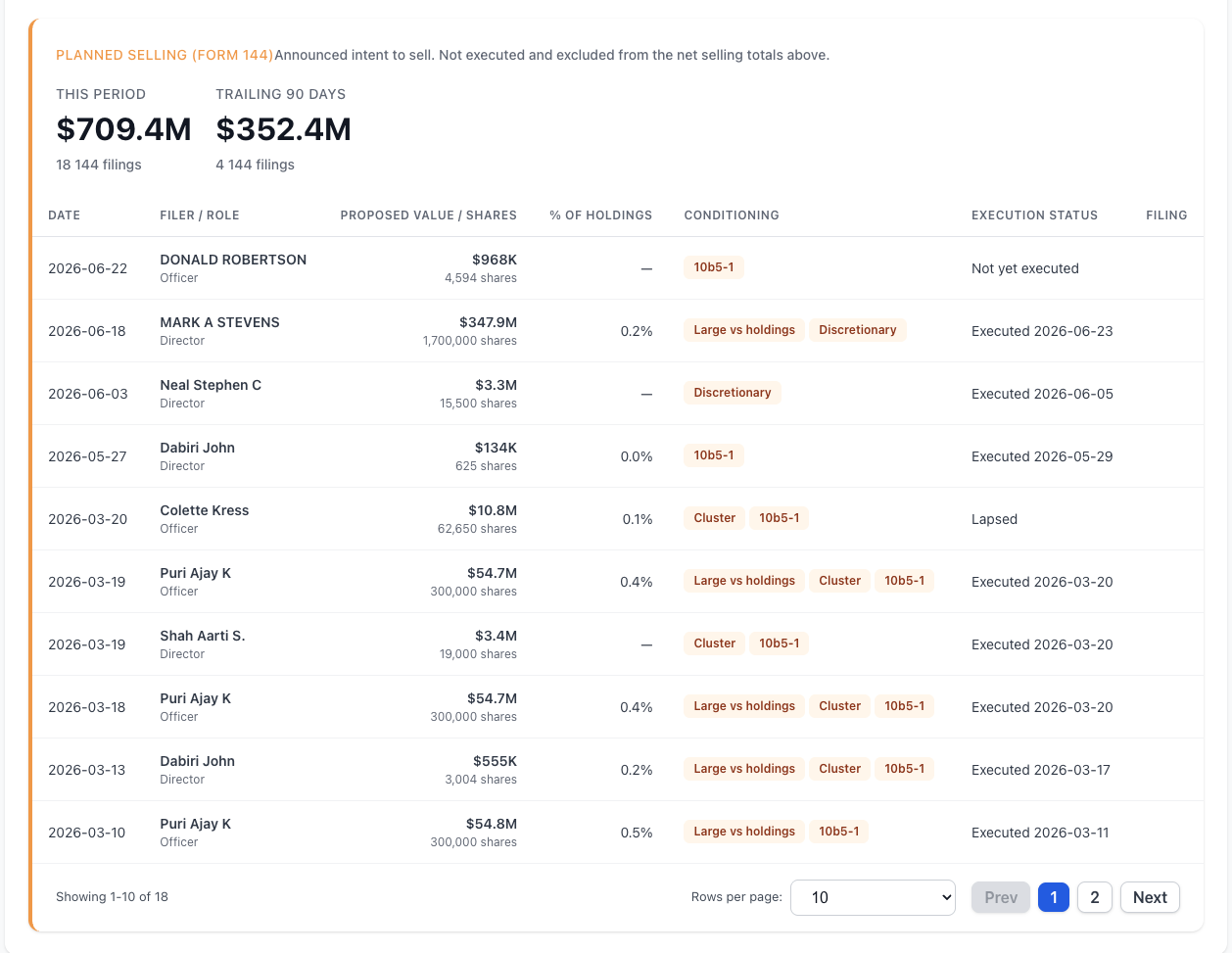
Historical coverage runs from November 1, 2025 to the present, so you can look back at planned selling that preceded recent moves, not just watch new filings arrive.
Every Form 144 runs through the same severity scoring we apply to the rest of the filing universe, so a large planned sale by a named officer surfaces above routine, small-dollar notices. Add a ticker to your watchlist and a Form 144 on that company triggers an alert. Planned selling signals are also folded into the daily email digest, so the forward-looking filings show up next to the completed transactions each morning.
Forward-looking signals are worth more than historical records. Form 144 is the forward-looking insider signal, and now it is one you can actually see in time.
Want to be alerted when insiders file Form 144 for companies you follow? Add any ticker to your NexusAlert watchlist and get planned selling alerts delivered to your inbox.
Form 4 tells you what an insider did. Form 144 tells you what an insider is about to do, and that is the signal most investors never see in time.
Sources
Prefer to own it outright? NexusAlert lifetime access is available for a one-time payment of $299 — no subscription, no recurring charges, all future Pro features included. Learn more →