Aflac 8-K: Japan Breach Exposes 4.38 Million Customers
Aflac's June 30 8-K says a hack on Aflac Japan exposed 4.38 million policyholders while US systems stayed clean. Analysis by NexusAlert.
Aflac just told the SEC that hackers reached 4.38 million customers
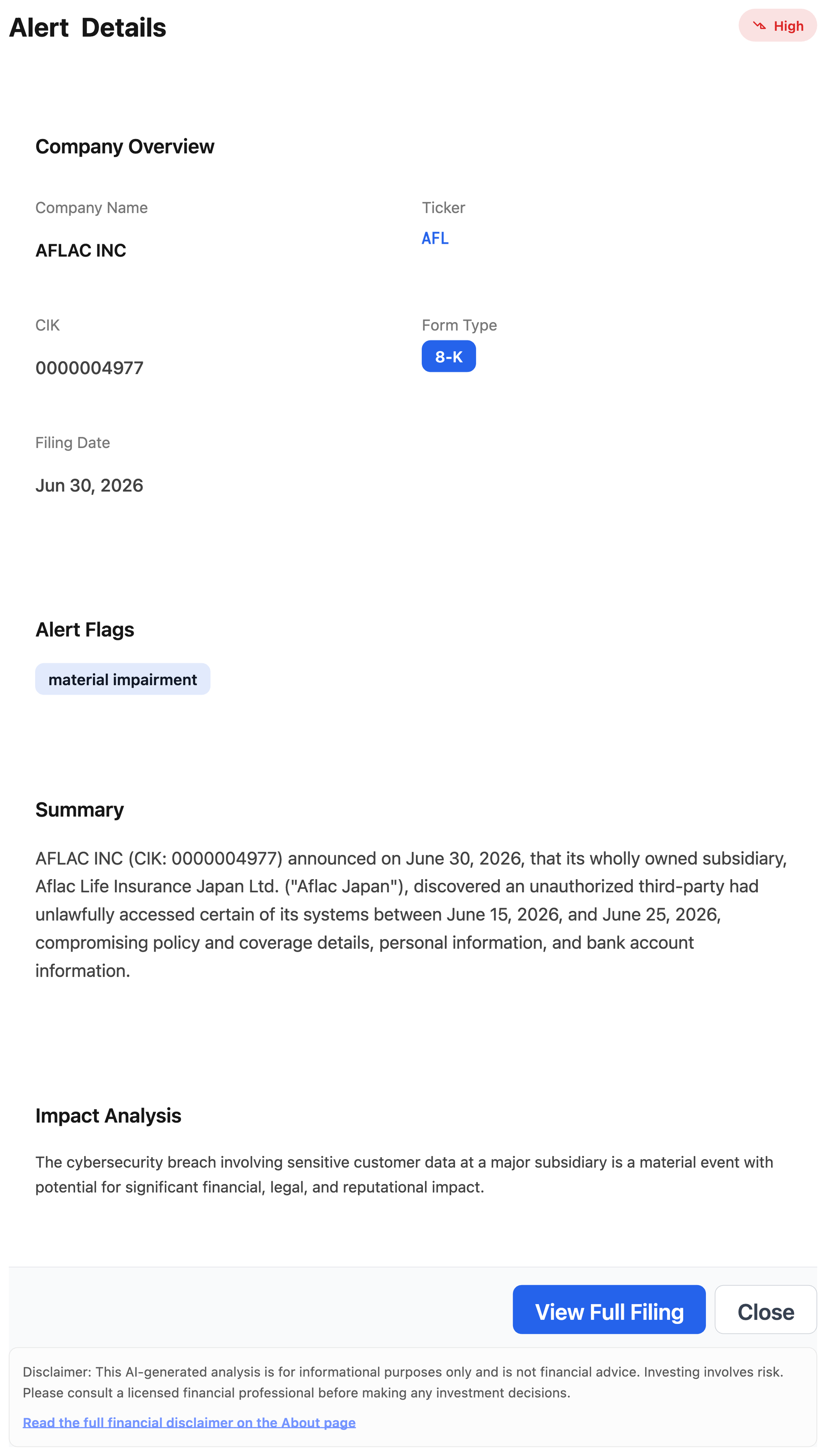
Aflac filed an 8-K on June 30, 2026 disclosing that an unauthorized third party broke into the systems of its Japanese subsidiary and exposed data on roughly 4.38 million current and former policyholders. The intruder had access for ten days, from June 15 to June 25, before Aflac Japan cut it off.
That is the kind of number that moves a stock and a headline at the same time. Here is what the filing actually says, and the one thing most readers will get wrong about it.
What the filing says
Aflac Incorporated reported the incident under Item 8.01 (Other Events). The breach hit Aflac Life Insurance Japan, known as Aflac Japan, not the U.S. parent. The exposed data includes names, addresses, phone numbers, and policy and coverage details. A subset of customers, roughly 230,000 by Japanese press accounts, also had the bank account information used for premium withdrawals exposed.
Two categories were not touched: My Number profiles (Japan’s national identification system) and credit card details. Aflac Japan took the affected systems offline on June 25, notified Japan’s Financial Services Agency and the police, and brought in outside cybersecurity experts. As of the filing, no misuse of the stolen data had been confirmed.
Is this a problem for U.S. shareholders? Here is the honest answer
The instinct when you see “Aflac breach” is to assume your own policy data, or the company’s core U.S. book, is exposed. It is not. The 8-K is explicit that the incident is confined to systems in Japan and has no impact on Aflac Incorporated’s U.S. business systems.
That distinction matters, because Aflac Japan is not a side project. Japan is the company’s largest market by policies in force, and a breach that compromises bank account details for premium withdrawals carries real regulatory, legal, and reputational cost even when the U.S. systems are clean. So the right read is neither “ignore it” nor “the whole company is compromised.” It is a contained but material event in the segment that matters most to Aflac’s earnings.
The bigger picture
A cyberattack is easy to file under “IT problem” and move on. A data breach that lands in an 8-K is something else: it is management telling investors, under disclosure rules, that an event is material enough to flag. The scope, the customer count, and the data categories were all in the filing on June 30, often before the full figure saturates U.S. financial media.
A breach is not an IT footnote. When the customer count shows up in an 8-K, it is a number the company decided you needed to know.
That is the entire case for reading the filing instead of the headline. The headline says “Aflac breach.” The filing tells you it is Japan only, 4.38 million customers, bank details for a subset, U.S. systems untouched. Those distinctions are the difference between panic and a clear-eyed risk assessment.
How NexusAlert flagged it
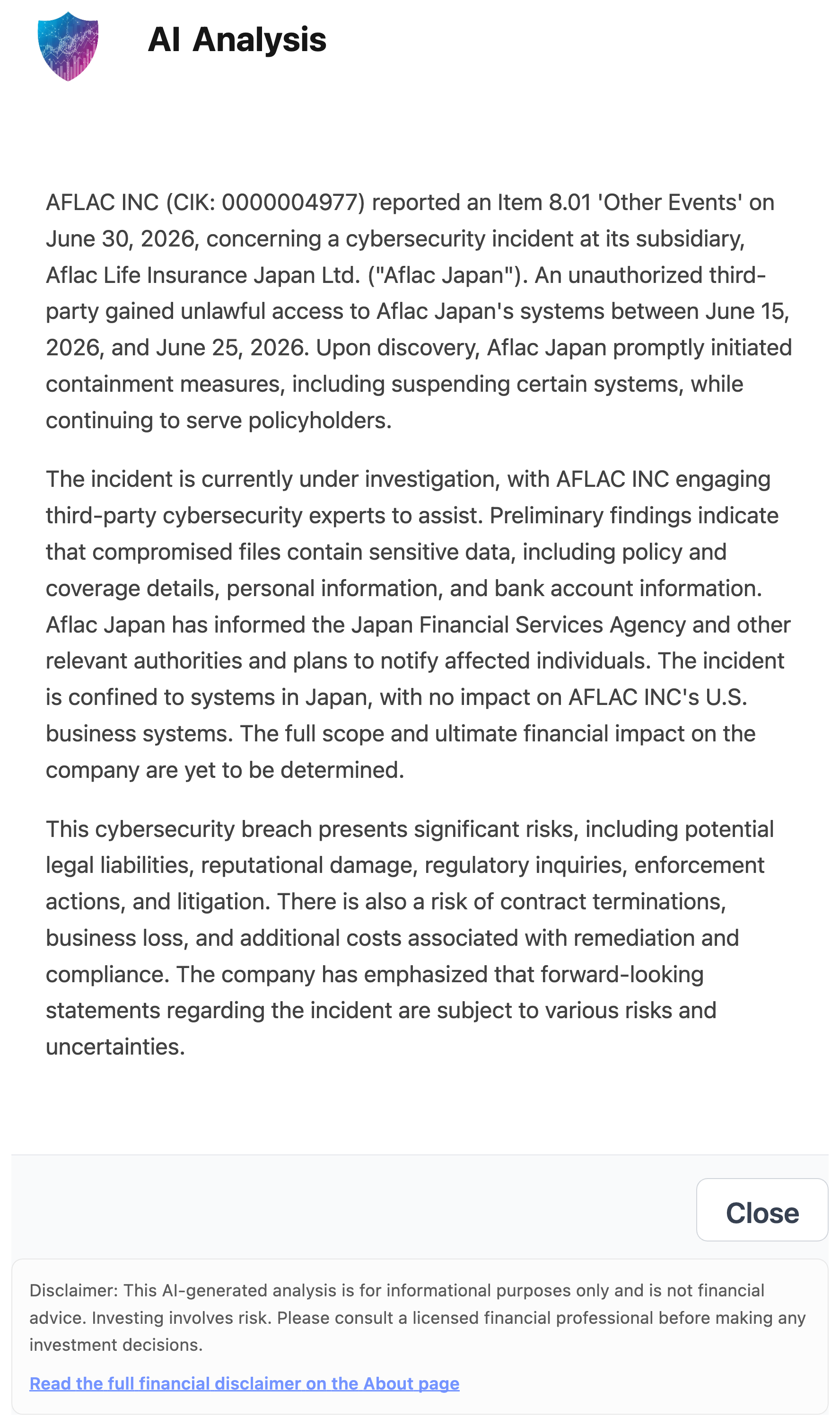
NexusAlert surfaced this 8-K the same day it was filed. The AI summary pulled the breach window, the affected-customer count, and the exposed data categories straight from the document, and the impact analysis framed it as a material legal and reputational risk rather than a routine IT note.
Create a free NexusAlert account to get high-severity filing alerts like this one the moment they hit EDGAR.
Sources
Prefer to own it outright? NexusAlert lifetime access is available for a one-time payment of $299 — no subscription, no recurring charges, all future Pro features included. Learn more →