
The Family Behind Utz Chips Just Agreed to Sell Control at a 91% Premium
Utz agreed to go private at $14.25 a share, a roughly 91% premium in a $2.9 billion deal. Intersnack and the founding Rice and Lissette family will each own half.
The snack brand in your pantry just handed shareholders a 91% overnight premium
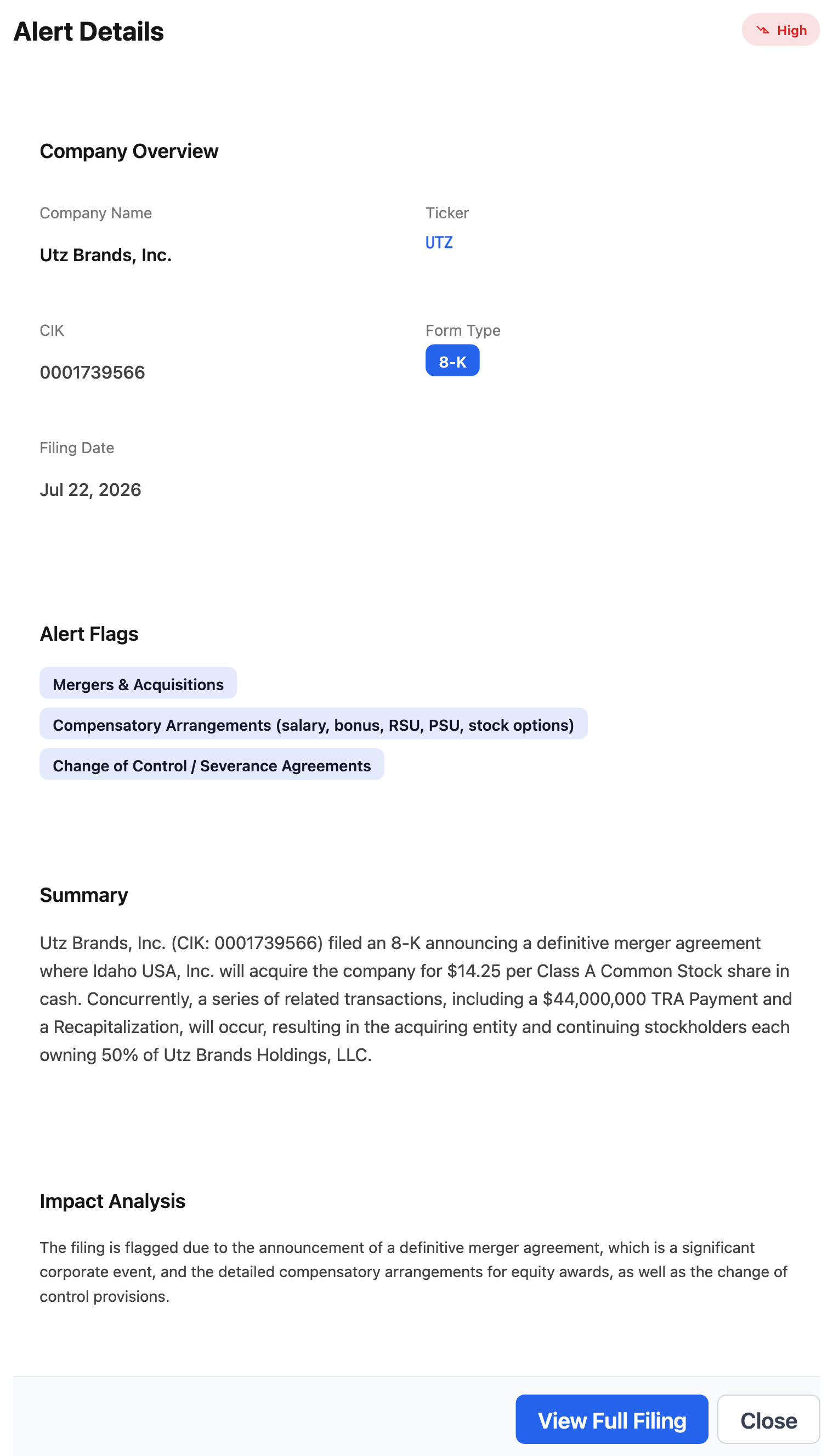
On July 22, 2026, Utz Brands ($UTZ) filed an 8-K disclosing a definitive merger agreement to go private at $14.25 per Class A share in cash, a premium of roughly 91% over the July 20 closing price and an enterprise value of about $2.9 billion. The stock, which had traded near seven dollars, nearly doubled in a session.
The company behind Utz potato chips, Zapp’s, On The Border, and Boulder Canyon has been family run since William and Salie Utz started frying chips in a Hanover, Pennsylvania kitchen in 1921. The Rice family married into it in 1938 and has steered it ever since. On the surface, this reads as the founding family finally cashing out.
So here is the honest question, and it is not rhetorical: when a family business accepts a 91% premium to disappear from public markets, is that a windfall for the shareholders left holding the stock, or a warning that the price had gotten too cheap to stay public?
Read the filings against each other and the answer is more interesting than either.
What the filing actually says
The buyer is not a mystery bidder. The 8-K names the merger vehicle “Idaho USA, Inc.” and its subsidiary “Idaho Merger Sub, Inc.,” which is exactly the kind of anonymous shell name that sends people down the wrong path. The definitive agreement and the DEF 14A name the real acquirer: Intersnack Group GmbH & Co. KG, the German snacking giant behind Chio, Pom-Bär, and KP Snacks in Europe.
Each Class A share converts into $14.25 in cash. Class V common stock is canceled for no consideration. A $44,000,000 payment settles the tax receivable agreement, and a recapitalization reshuffles the capital structure. Intersnack is funding it with roughly $920 million of its own cash, a $1.1 billion term loan, and a $250 million asset-based facility, plus rollover equity from the founding family.
The board approved the deal on the unanimous recommendation of a special committee. There is a $50,000,000 termination fee payable by Utz under certain circumstances, and an outside date of April 20, 2027, though both sides expect to close in the fourth quarter of 2026.
The misconception this busts
The instinct is to read this as the Rice family taking the money and leaving. The filing says the opposite. After closing, Intersnack and the Rice and Lissette Family Entities will each own 50% of Utz Brands Holdings, LLC, and Dylan Lissette becomes Executive Chair.
This is not an exit. It is a recapitalization dressed as a sale. The public shareholders get cashed out at $14.25. The family does not. They roll their stake into the private company and keep half the business and a board seat, alongside a strategic partner with the balance sheet to expand Utz into a market Intersnack has wanted for years. The premium is what it costs to move the company off the public tape, not what the family thinks the business is worth.
NexusAlert caught the whole structure across four separate forms filed inside two days, not one press release. The 8-K, the DEF 14A, an SC 13D/A, and a Form 3 all landed July 20 to 21, and the same-day signal read names the acquirer, the premium, the enterprise value, and the 50/50 split from inside the paperwork.
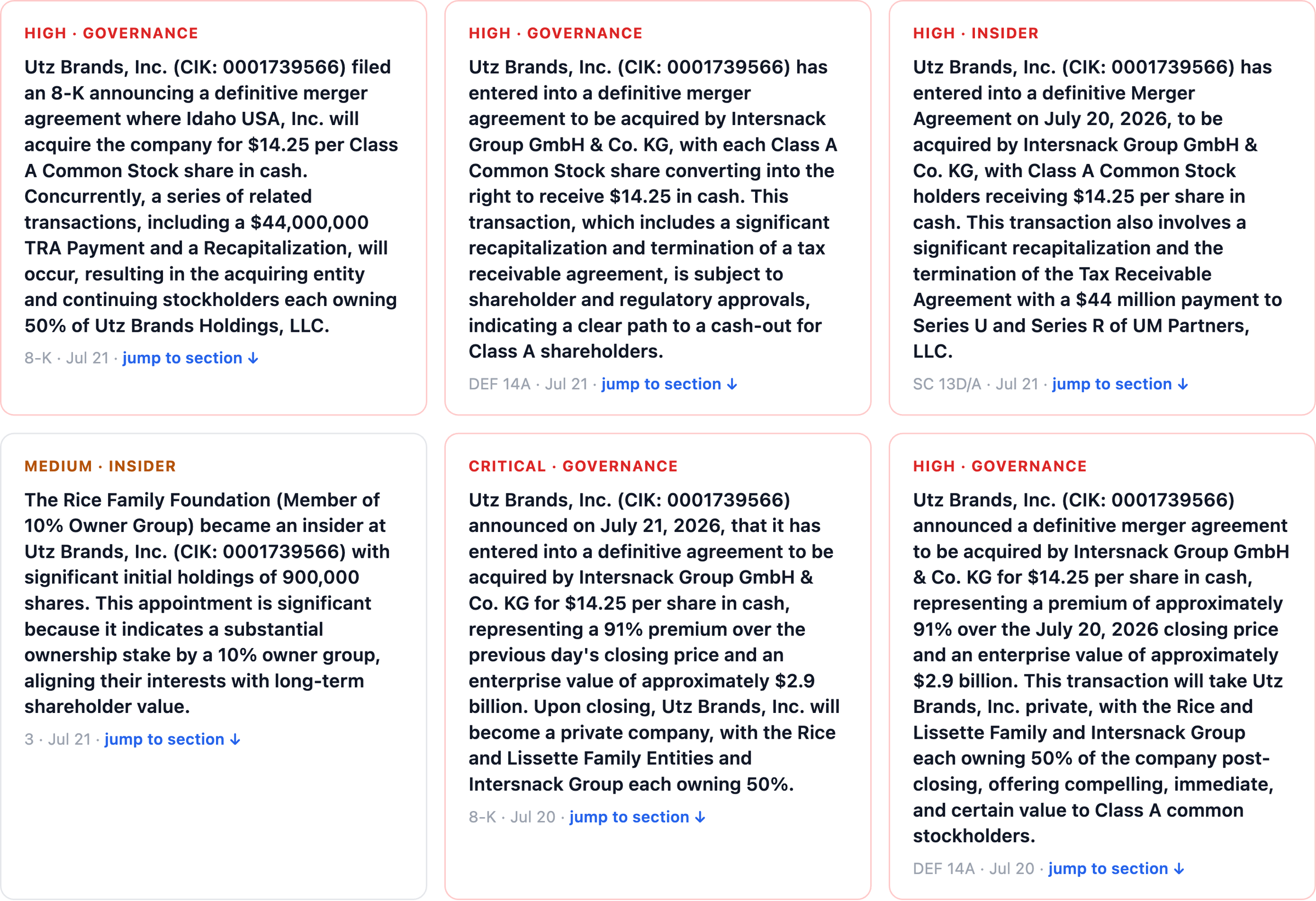
A 91% premium is not the market waking up to a stock. It is a buyer paying to take the decision away from the market.
The bigger pattern is who was not positioned
Here is the part the celebratory headlines skip. Before the deal surfaced, almost no large institution was set up for it. On the NexusAlert Company Dossier, Utz carried an Institutional Flow score of 0.3 out of 10, the bottom 3% of companies scored, alongside a middling Financial Strength score of 5.2 and a Governance score of 4.0.
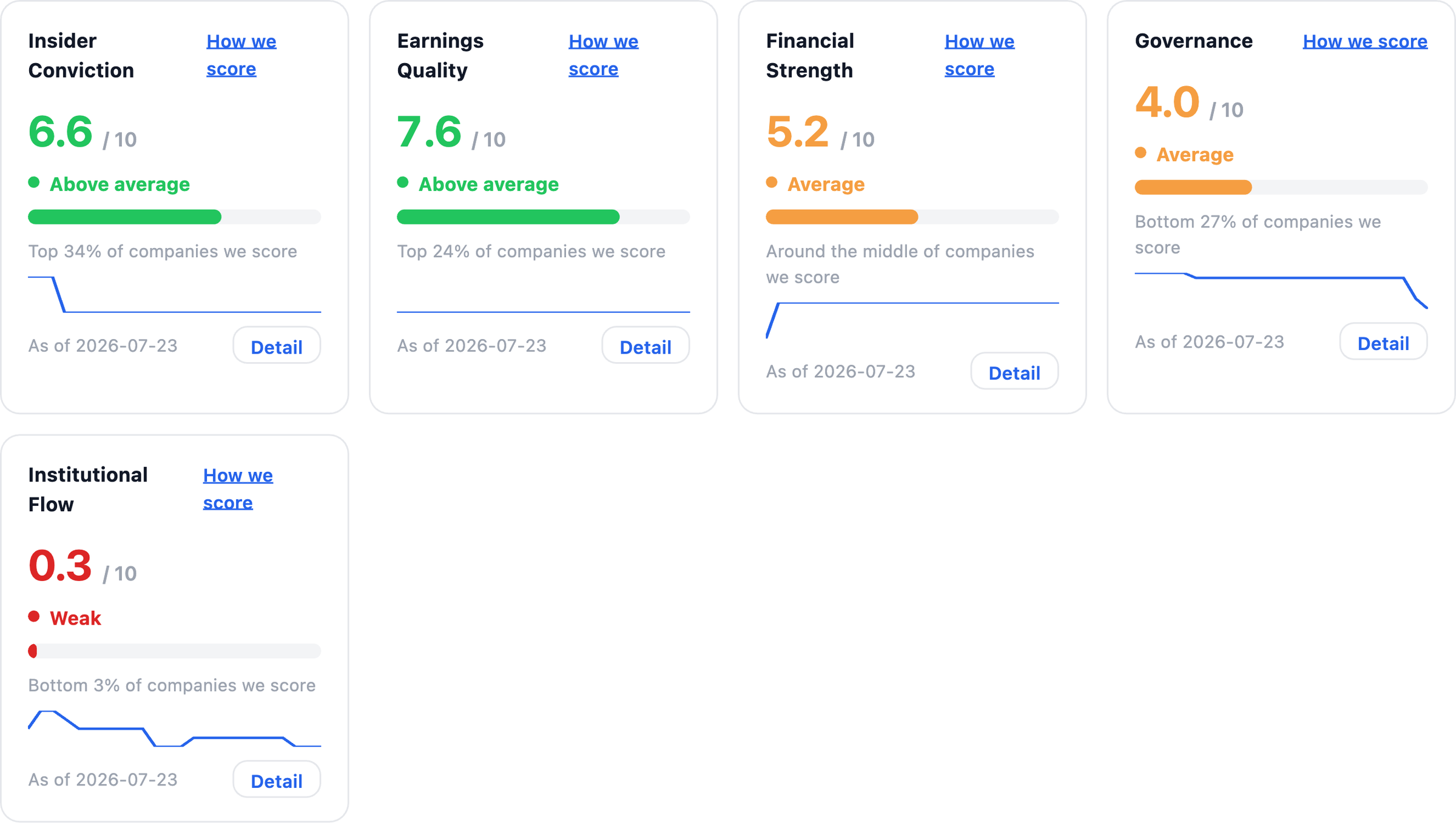
That is the quiet lesson in a buyout like this one. The gain did not go to the funds that had front-run a rumor, because the flow data says they were not there. It went to the shareholders who simply owned a boring snack company at a boring price and woke up to a filing. The edge was never in the tape. It was in reading the 8-K the morning it dropped.
What to watch
The deal still needs a shareholder vote and regulatory clearance, and the DEF 14A sets the meeting mechanics. Watch for the vote date, any competing bid inside the go-shop window if one exists, and whether the $50 million termination fee ever comes into play. The outside date is April 20, 2027, so there is room for the timeline to slip past the expected fourth-quarter close.
NexusAlert fired multiple correlated High and Critical severity alerts on Utz the day the deal filed, tied the merger vehicle back to Intersnack, and surfaced the 50/50 ownership structure that turns a simple sale into a family recapitalization. That is the difference between knowing a stock jumped and knowing why. Read the whole filing, not the headline.
Create a free NexusAlert account
Sources
- Utz Brands, Inc. Form 8-K exhibit 99.1, filed July 22, 2026 (SEC EDGAR)
- Utz Brands and Intersnack Group announce agreement to take Utz private and partnership with founding family (Utz investor relations)
- CNBC, “Snacks maker Utz Brands to be taken private in $2.9 billion deal”
- Yahoo Finance, “Utz Brands to go private in $2.9 billion acquisition by Intersnack Group”
- Food Dive, “Snacks maker Utz Brands sold for $2.9B in go-private deal”
- StockTitan, “Utz snack maker could go private; Intersnack and families would split it 50-50”
Prefer to own it outright? NexusAlert lifetime access is available for a one-time payment of $299 — no subscription, no recurring charges, all future Pro features included. Learn more →