
Summit's Ivonescimab Cut Death Risk 34% in Phase III HARMONi-6 (HR 0.66)
Summit Therapeutics' June 1 8-K: ivonescimab plus chemo beat a PD-1 inhibitor plus chemo on overall survival in first-line squamous NSCLC, HR 0.66 (p=0.0017). Here's what HARMONi-6 means.
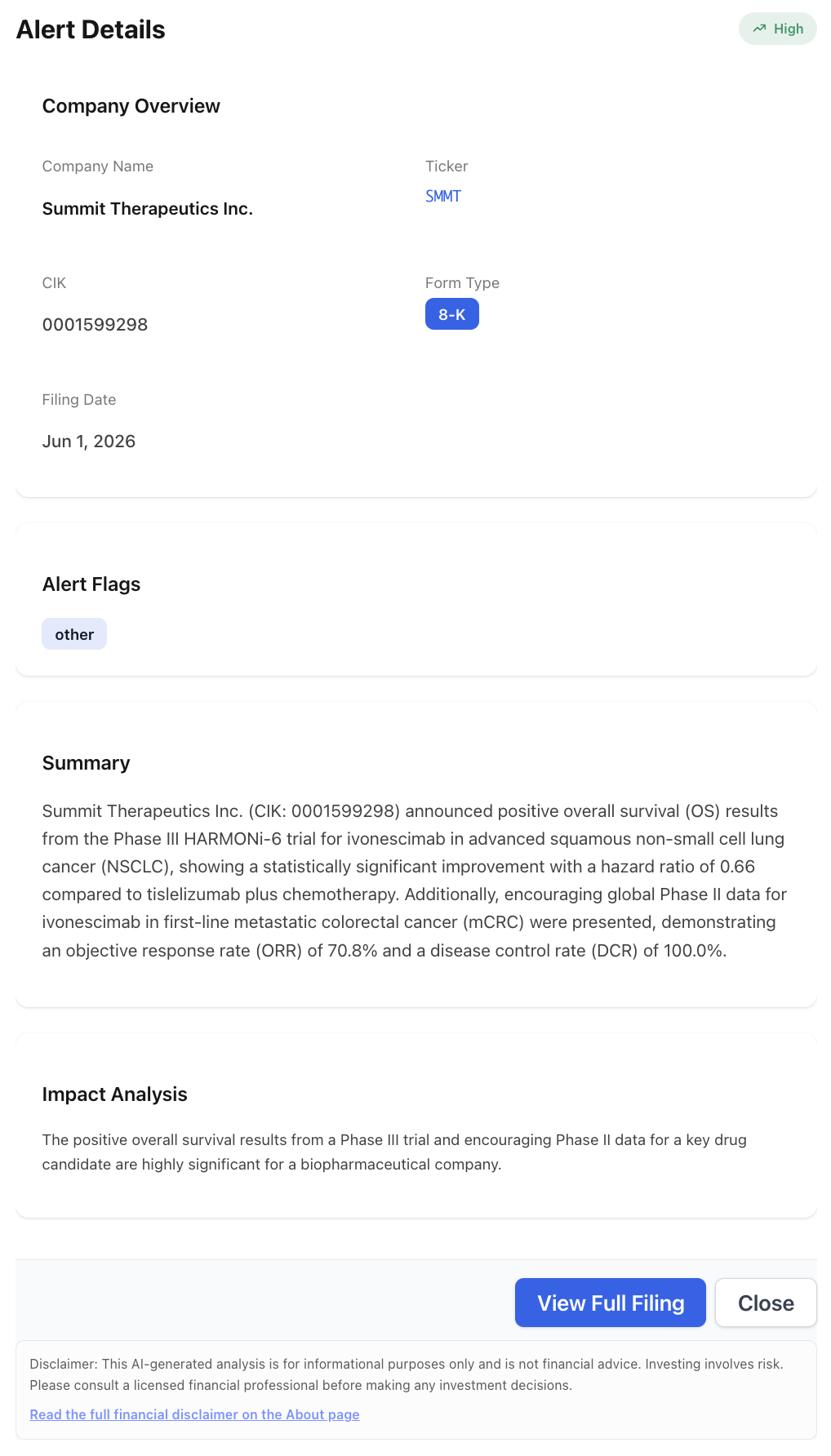
A drug beat a PD-1 inhibitor head-to-head and the surprise was that it won on the hardest endpoint there is. On June 1, 2026, Summit Therapeutics, Inc. (NASDAQ: SMMT) filed an 8-K disclosing that the Phase III HARMONi-6 trial of ivonescimab met its overall-survival endpoint in first-line advanced squamous non-small cell lung cancer. Ivonescimab plus chemotherapy reduced the risk of death by 34% versus tislelizumab plus chemotherapy — a hazard ratio of 0.66 (95% CI: 0.50–0.87, p=0.0017).
Overall survival is the endpoint that drugs fail on. Progression-free survival can move without patients living longer; a statistically significant OS benefit in a head-to-head against an approved PD-1 inhibitor is the readout oncology investors wait years for. NexusAlert flagged the filing the same day it hit EDGAR, as a High-severity opportunity.
What HARMONi-6 Actually Showed
Ivonescimab is a PD-1/VEGF bispecific antibody — one molecule that blocks the PD-1 immune checkpoint and the VEGF angiogenesis pathway at once. HARMONi-6 tested it against tislelizumab, an approved PD-1 inhibitor, with both arms on chemotherapy, in previously untreated advanced squamous NSCLC.
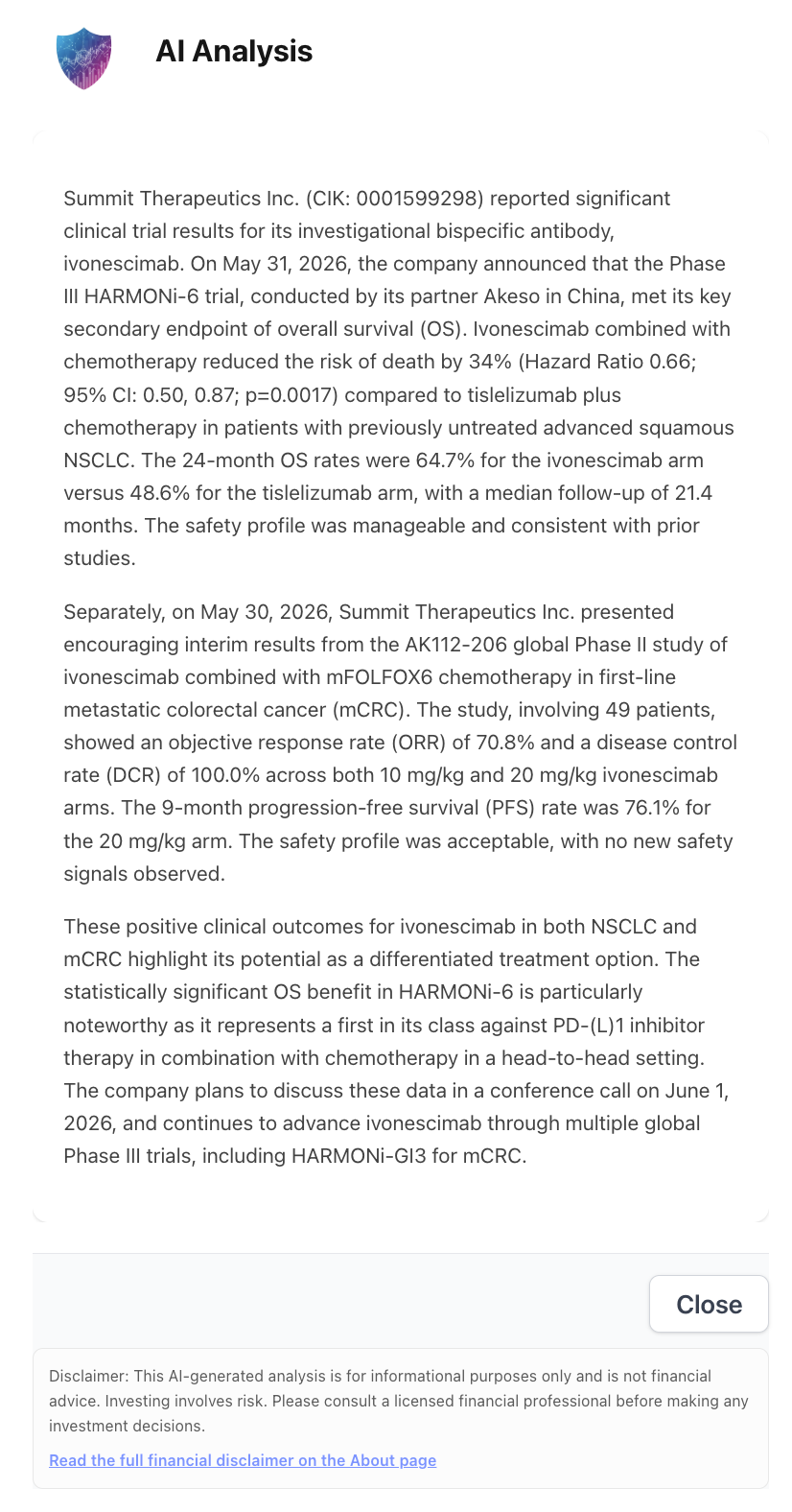
The headline is the hazard ratio, but the survival curves are where the benefit lives. Median overall survival came in at 27.89 months for the ivonescimab arm versus 23.69 months for the tislelizumab arm. Two-year survival was 64.7% versus 48.6% — a roughly 16-point gap in the share of patients still alive at 24 months.
The trial enrolled 532 patients and was run by Summit’s partner Akeso in China. The data were selected for a Plenary Session at the 2026 ASCO Annual Meeting — the first time a China-originated investigational oncology drug has been chosen for the ASCO Plenary in the society’s 61-year history.
A Second Readout in the Same Week
The 8-K bundled a separate signal. On May 30, Summit and Akeso presented interim data from AK112-206, a global Phase II study of ivonescimab plus mFOLFOX6 chemotherapy in first-line metastatic colorectal cancer.
Across the 49-patient study, ivonescimab posted an objective response rate of 70.8% and a disease control rate of 100%, with a 9-month progression-free survival rate of 76.1% in the 20 mg/kg arm. Colorectal cancer has been stubborn ground for immunotherapy outside a narrow biomarker-defined slice of patients, so a 100% disease control rate in an unselected first-line population is the kind of early number that gets a drug into more trials quickly.
Neither readout is an approval. Both are catalysts that reset how the market models ivonescimab’s addressable market — and they landed within 48 hours of each other.
What the Ownership Picture Says
A drug-trial catalyst lands differently depending on who already owns the stock. On the Institutional tab, NexusAlert tracks 13F and 13D/13G disclosures over time, plotted against the share price.
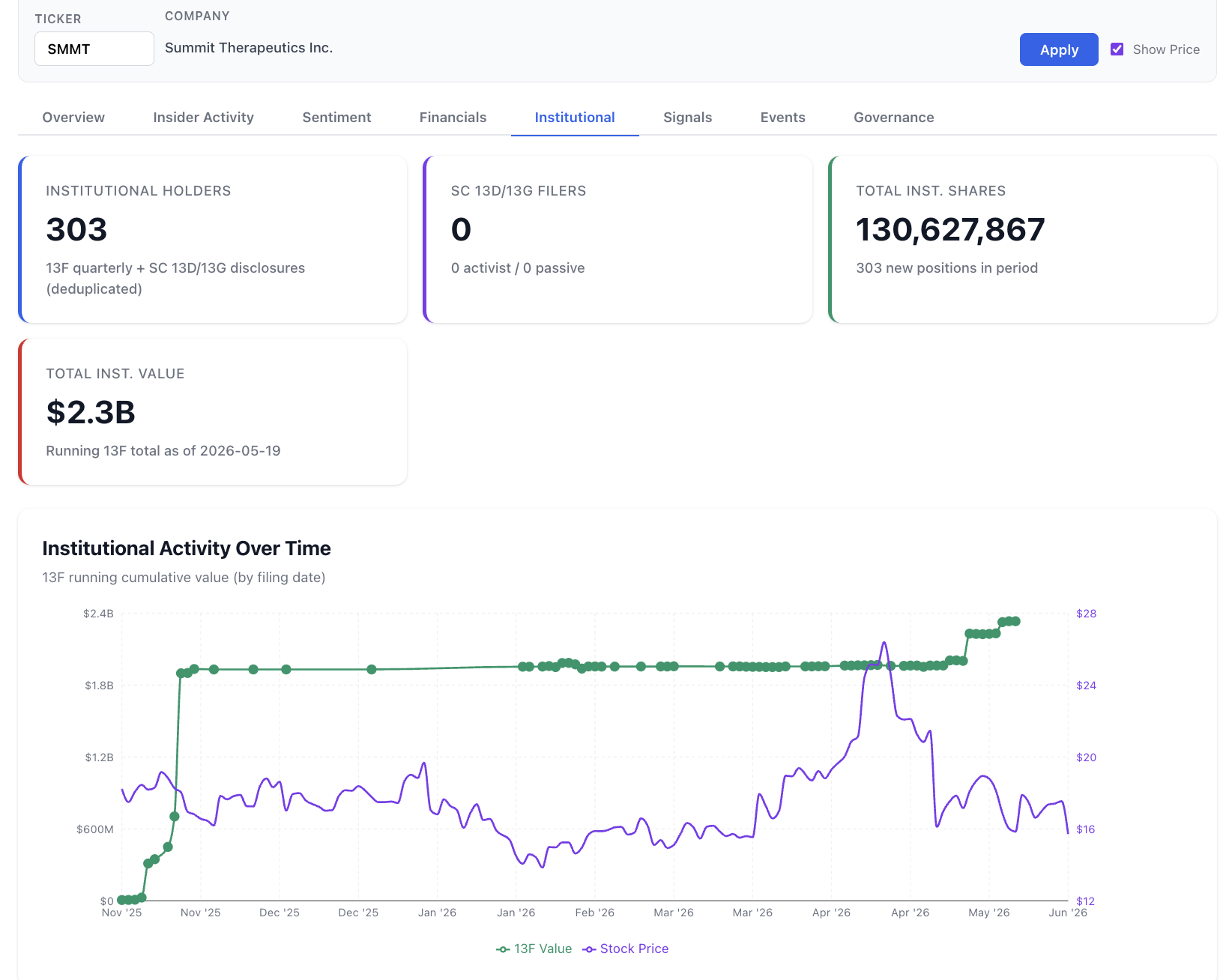
The five largest institutional holders on file are Baker Bros. Advisors, State Street, Vanguard Capital Management, Vanguard Portfolio Management, and D. E. Shaw. Baker Bros., a dedicated biotech specialist, sits at the top of that list — the kind of concentrated, sector-expert anchor holder whose conviction is itself a signal heading into a binary clinical readout. The price line in the chart climbs into late May, the window when the ASCO data began circulating.
A 34% reduction in the risk of death, read off an 8-K the morning it files, is exactly the signal retail investors learn about hours or days after the institutions holding the stock already have. NexusAlert exists to close that gap.
Why This Showcases NexusAlert
Three things had to happen for this to be useful before the news cycle caught up: the 8-K had to be parsed the moment it filed, the AI layer had to extract the hazard ratio, confidence interval, and p-value rather than just the press-release adjective, and the alert had to be ranked High so it surfaced above the day’s noise. That’s the product.
Create a free NexusAlert account and get the same filings, parsed and ranked, the moment they hit EDGAR.
Sources
- Summit Therapeutics 8-K and press release (June 1, 2026): smmttx.com — HARMONi-6 overall survival
- PR Newswire: HARMONi-6 Demonstrates Significant Overall Survival Benefit (HR=0.66)
- Business Wire: Ivonescimab Demonstrated a Statistically Significant Overall Survival Benefit in 1L Squamous NSCLC (HARMONi-6)
- BioPharm International: Ivonescimab Improves Overall Survival in Phase III HARMONi-6 Trial for Squamous NSCLC
- Business Wire: Encouraging Global Phase II Ivonescimab Data in First-Line Metastatic Colorectal Cancer (AK112-206)
- StockTitan: Summit Therapeutics (SMMT) posts positive ASCO 2026 ivonescimab survival and response data
Prefer to own it outright? NexusAlert lifetime access is available for a one-time payment of $299 — no subscription, no recurring charges, all future Pro features included. Learn more →