
Micky Malka Just Bought $20 Million of Robinhood Stock, His Third Buy in Nine Days
Robinhood director Meyer Malka bought 250,000 HOOD shares at $80.74 on June 5, his third open market buy in nine days. Analysis by NexusAlert.
The VC who backed Robinhood early is buying again
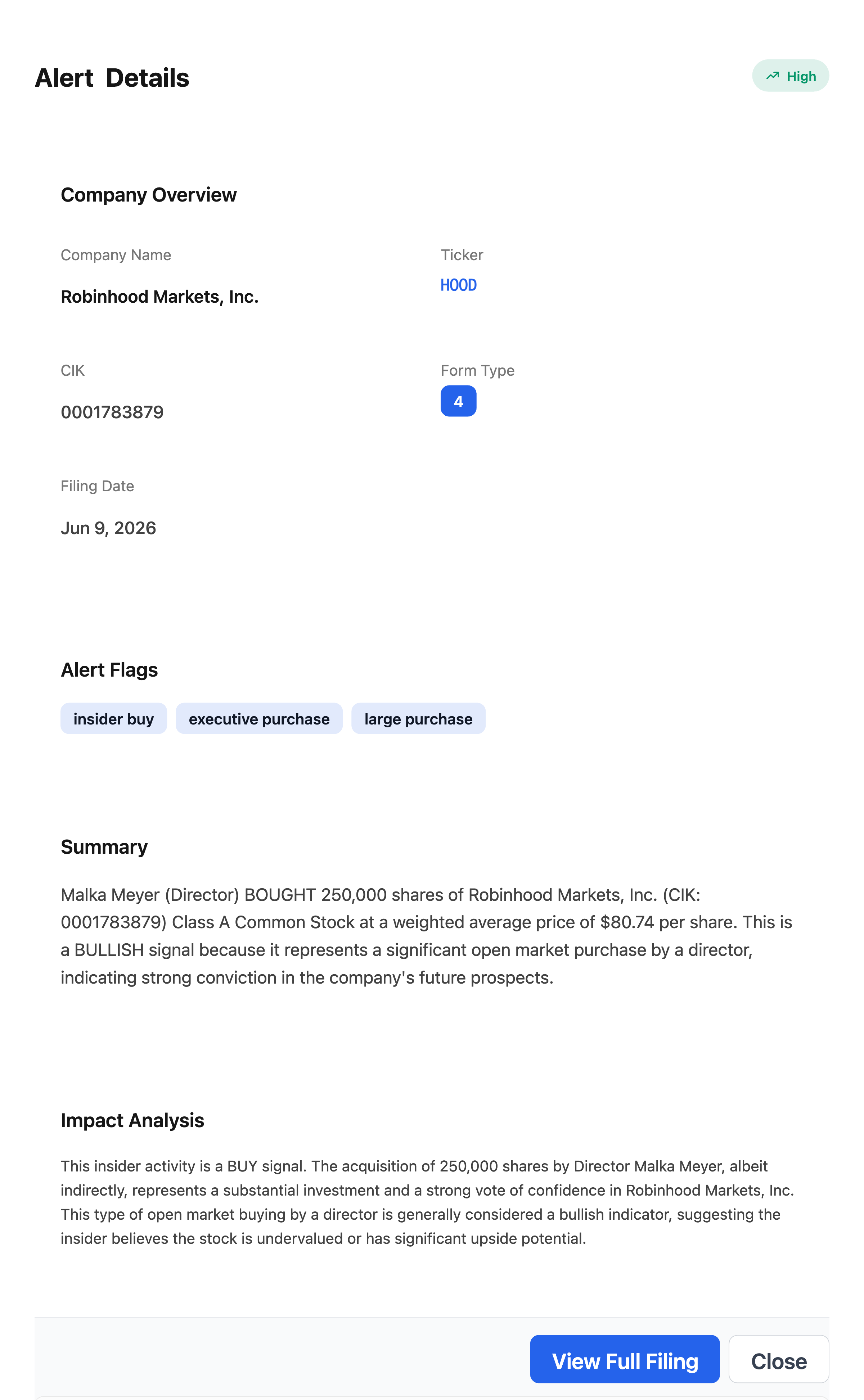
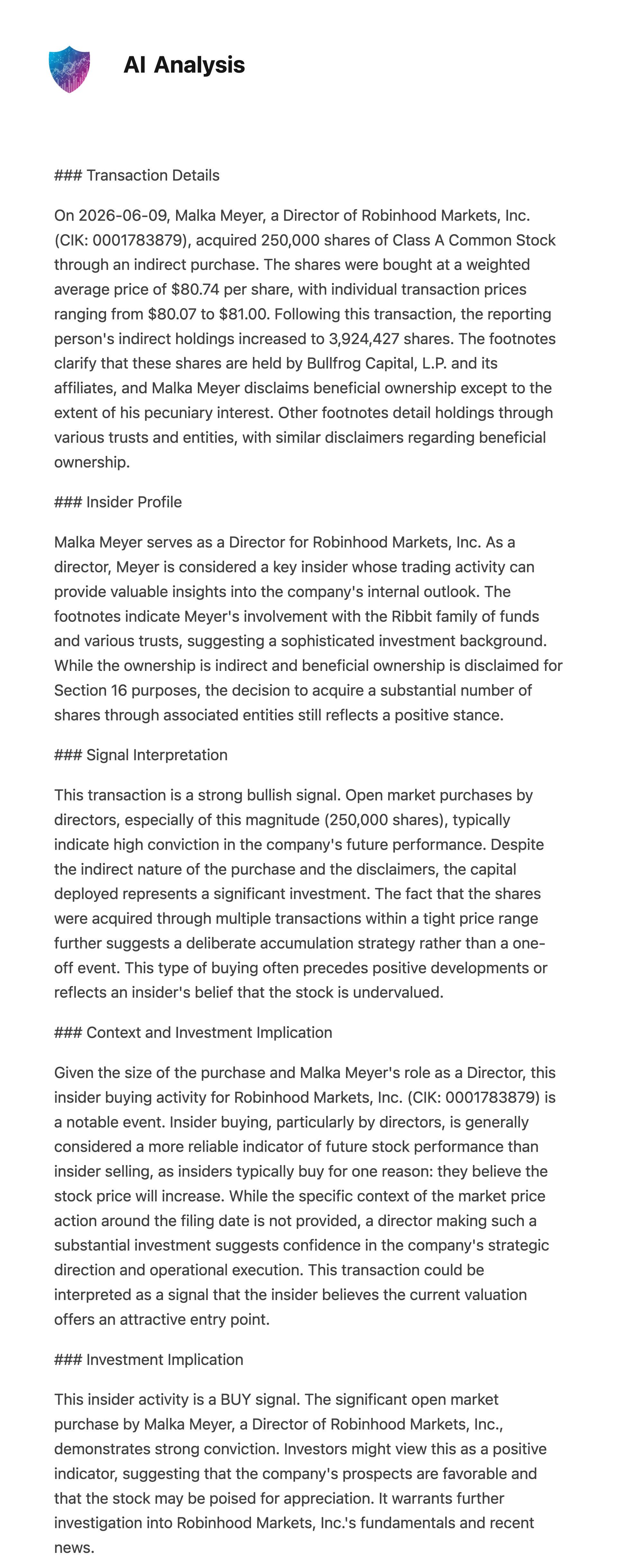
250,000 shares at a weighted average of $80.74 per share, roughly $20.2 million in a single day. That is what Meyer “Micky” Malka, Robinhood director and founder of the fintech venture firm Ribbit Capital, reported in a Form 4 filed with the SEC on June 9, 2026. The purchase itself happened on June 5, executed in tranches priced from $80.07 to $81.00.
Malka is not a random board member. Ribbit Capital wrote one of the earliest checks into Robinhood, and Malka has sat on the board since the company’s venture days. When the person who funded the company at the start puts new money in at market price 15 years later, that is worth a closer look.
And this was not a one off. It was his third large open market buy in nine days: 249,000 shares on May 28 (about $20.0 million), 181,000 shares on June 3 (about $15.1 million), and 250,000 shares on June 5 (about $20.2 million). Call it roughly $55 million of fresh money into $HOOD in under two weeks.
What the filing actually says
NexusAlert flagged the filing as a high severity insider buy the same day it hit EDGAR, with three flags: insider buy, executive purchase, and large purchase. The purchase was coded as an open market acquisition, the kind a director makes with their own capital rather than through an option exercise or a stock grant.
One detail the AI analysis surfaces from the footnotes: the purchase was made indirectly, through Bullfrog Capital, L.P., a Ribbit affiliated entity, which held 3,924,427 shares after the trade. Across his trusts and entities, Malka’s reported stake now sits near 7.9 million shares, worth roughly $662 million at the June 9 close.
Is this a buy signal? The honest answer
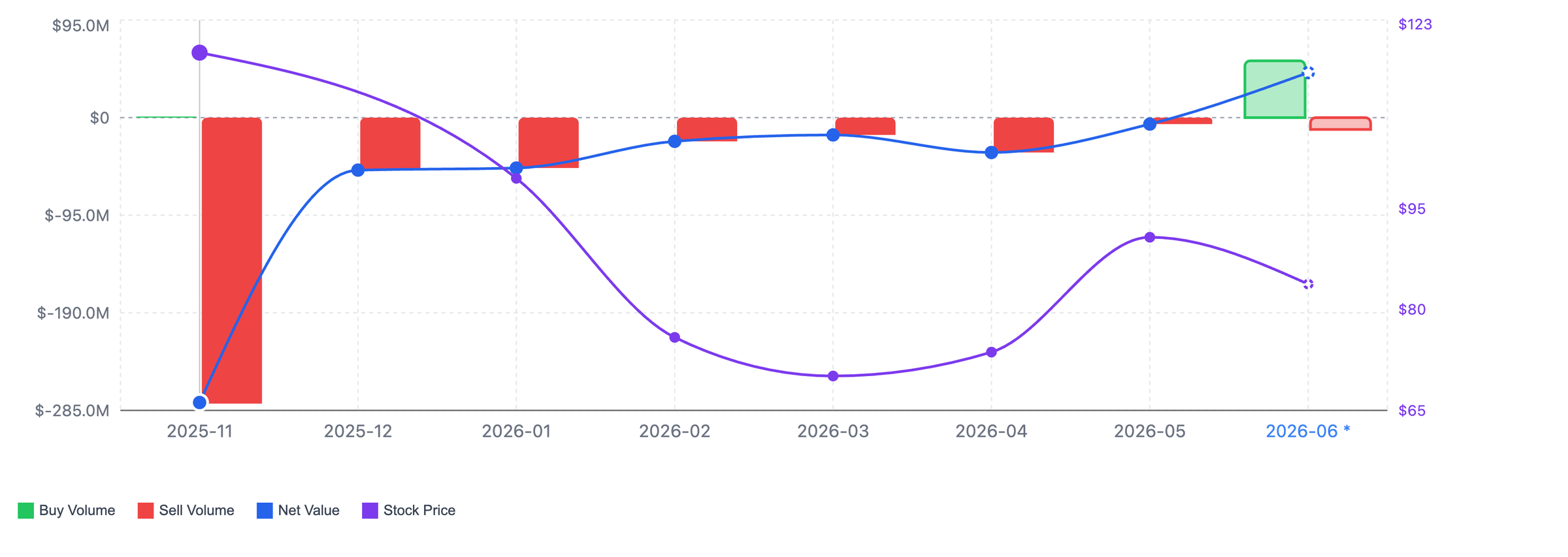
Here is the tension. Over the past seven months, Robinhood insiders as a group reported about $470 million in stock sold against only about $56 million bought. Executives have been steady sellers all year. So is one director’s buying spree just noise against that wall of selling?
Not so fast. Classify the lines before you score them. That aggregate mixes very different transactions: prescheduled 10b5-1 plan sales (the recent executive sales we checked were exactly that), shares withheld at RSU vesting to cover taxes, and discretionary sales. Planned diversification by employees who are paid in stock tells you very little. A director wiring $55 million of new cash into the open market at full price tells you considerably more.
One more piece of honesty: Malka is not all in without protection. In November 2025 he reported a variable share forward covering up to 1 million of his existing shares, with a floor near $97.15 and a cap near $149.51, settling in late 2027. A slice of his old position is hedged. The new purchases are a different animal: no plan, no exercise, no collar, just cash for stock at the market price.
The misconception worth busting
Most “insider buying” headlines are not what they look like. The majority of acquisitions reported on Form 4s are option exercises, RSU vests, or compensation grants. They show up as buys in screeners, but no conviction was required and often no cash changed hands. The reverse is true for sales: many are tax withholding at vesting or prescheduled plan sales, not a vote against the company.
The line that matters is the transaction code. An open market purchase, code P, with the insider’s own money is the rarest and most informative entry on the form. That is what all three of Malka’s June filings show, and it is why this pattern earns attention while a dozen routine executive sales do not.
One insider buy is a data point. Three in nine days is a thesis.
What to watch from here
$HOOD is down roughly 26 percent this year, and Malka’s buying landed in the $80 to $84 range while Wall Street’s average price target sits near $99. He is buying a drawdown in a company he has known longer than almost anyone on the cap table.
What would strengthen the signal: more code P purchases, from him or from other officers and directors. What would weaken it: the buying stops here and the planned selling keeps rolling. Either way, the filing tells you before the headlines do.
The broader lesson applies to any stock you own: read the whole filing, not the headline. The transaction code, the footnotes, and the entity holding the shares change the meaning of a trade that looks simple in a screener.
NexusAlert reads every Form 4 as it hits EDGAR, classifies the transaction, and flags the rare filings that actually signal conviction. Create a free NexusAlert account and get the next one the day it lands.
Sources
- TipRanks: Robinhood Insider Bought $20M of HOOD Stock. Should Investors Follow?
- StockTitan: Meyer Malka fund adds 249K Robinhood shares in open market buy
- StockTitan: Robinhood director linked funds buy 181K HOOD shares
- StockTitan: HOOD director Malka enters $89.3M variable share forward
- Yahoo Finance: While Executives Sell, This Billionaire Backed Fund Is Quietly Accumulating Robinhood Stock
- CoinCentral: Robinhood Stock: Director Buys $20M as IPO Underwriting Approved
Prefer to own it outright? NexusAlert lifetime access is available for a one-time payment of $299 — no subscription, no recurring charges, all future Pro features included. Learn more →