
Bowlero's Founder Bids $4.35 to Take Lucky Strike Private
CEO Thomas Shannon offered $4.35 a share on Nov 16. A director bought 11,749 shares at about $3.32 days earlier. Here is what the filings say.
The founder of Bowlero wants his bowling empire back for $4.35 a share.
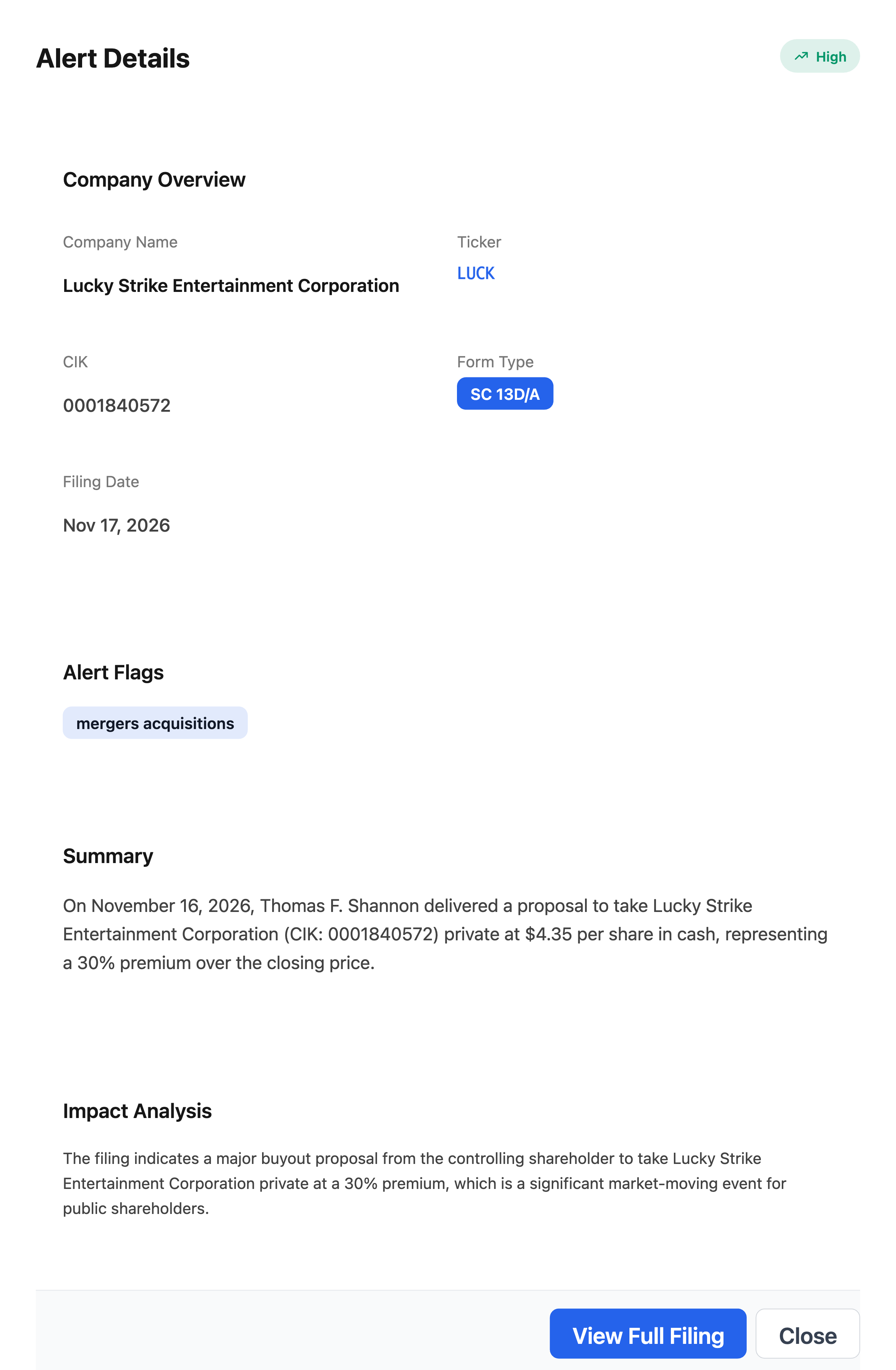
On November 16, Lucky Strike Entertainment founder and CEO Thomas Shannon offered to buy every Class A share he does not already own for $4.35 in cash. Lucky Strike is the company most people still know as Bowlero, the chain behind 366 bowling and entertainment centers. The offer landed on EDGAR the next morning as Amendment No. 3 to Shannon’s SC 13D.
The headlines called it a 30% premium. The stock jumped 25.6% to close at $4.17 on November 17. But the filings around the offer tell a more interesting story than the premium does, and most of it was public before the bid existed.
What the filing says
Shannon already controls the company. The SC 13D/A shows him beneficially owning 82,622,289 shares, 52.3% of the Class A stock on an as-converted basis, most of it in Class B shares that carry ten votes each.
The proposal is non-binding. Shannon says he will not proceed unless a special committee of independent directors approves it, and he made the deal subject to a non-waivable majority-of-the-minority vote: holders of most of the Class A shares he does not own would have to say yes. The company’s own press release says the board expects to form that committee and has not decided how to respond.
The trade that came first
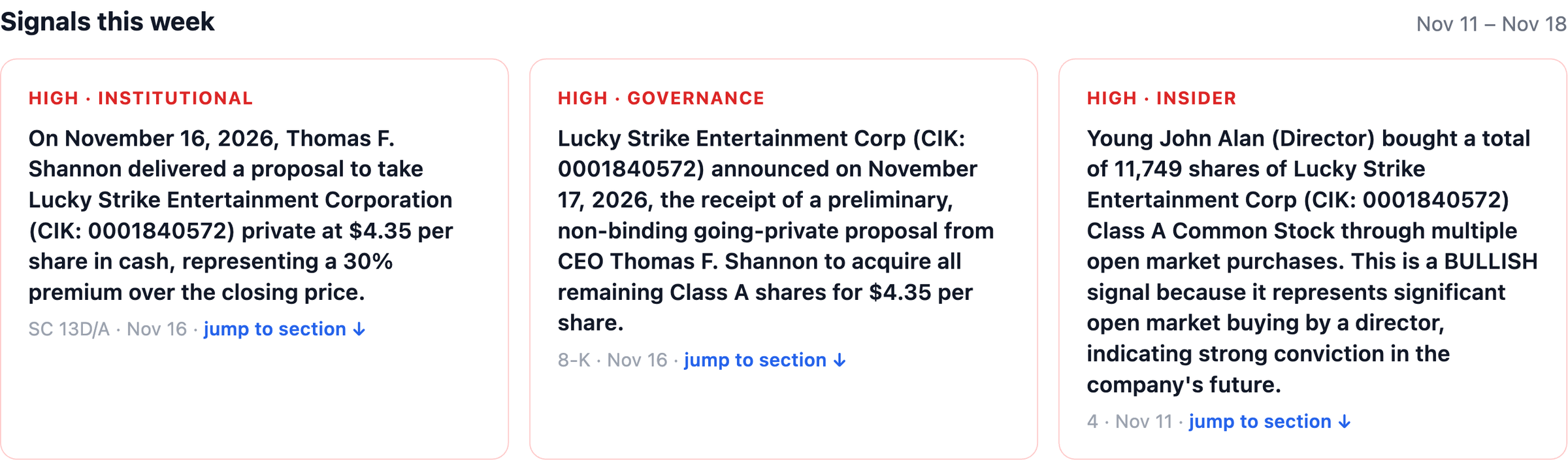
Here is the part the bid headlines skipped. On November 12, NexusAlert flagged a Form 4 from director John Alan Young: 11,749 shares bought on the open market, in several lots, at an average of about $3.32. That is roughly $39,000.
Four days later, the CEO offered $4.35. The stock had closed at $3.32 on November 16, the day the offer letter was dated, which puts the premium at about 31%.
So did the director know?
There is no evidence of that, and the filing does not say. The SC 13D/A names Shannon as the only reporting person and does not mention Young. Young has also been a steady buyer for a long time, with small open-market purchases going back to early 2025 at prices from about $10 down to today’s levels.
A more useful way to read his trade: a director with a seat in the boardroom thought the stock was worth buying at $3.32. He was buying five days after the company suspended its dividend.
The misconception: a 30% premium means a good deal
A premium only tells you where the price started. It says nothing about whether the price is fair.
Look at where Lucky Strike started from. On November 5 the company reported a fiscal first quarter net loss of $25.7 million, same-store revenue down 2.6%, and $1.817 billion of bank debt against $37.9 million of cash. The board suspended the quarterly dividend the same day. By mid November the stock had fallen close to 60% for the year.
When the buyer is the CEO, the premium is his opening offer, not your fair value.
Now look at Shannon’s own record. In late May he filed a Form 144 notice to sell 1,000,000 shares, worth about $10.0 million at the time. No sale followed and the notice lapsed. In September he went the other way and bought 30,000 shares in the open market at $5.86, about $175,800.
So within six months the same insider filed to sell when the shares were worth about $10, paid $5.86 a share as a buyer, and now offers $4.35 for everyone else’s stock. None of that is improper. Prices fell, and the business got harder. But it tells minority holders exactly how far the price has moved since the CEO was last on the tape.
The bigger pattern
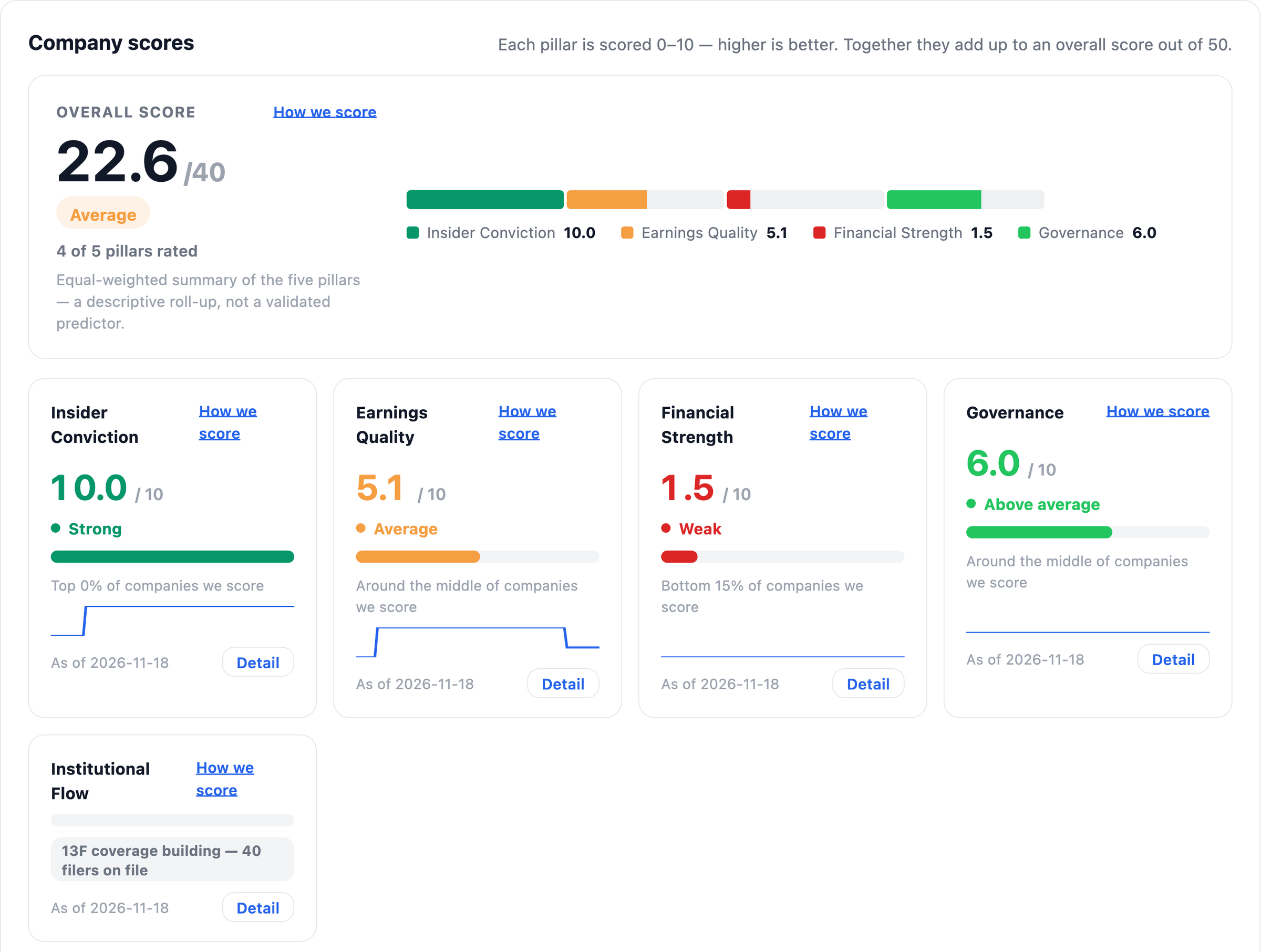
NexusAlert’s Company scores for $LUCK show the tension in one glance. Insider Conviction is 10.0 out of 10, because insiders have been net buyers, not sellers. Financial Strength is 1.5, in the bottom 15% of companies NexusAlert scores, because of that debt load.
Both readings point the same way. People who know the business best think the equity is cheap. The balance sheet explains why the market disagreed. A buyer who already controls the vote, owns the information edge, and is bidding near the bottom of a debt scare is in a strong position to set the terms.
That is why the majority-of-the-minority condition matters. It hands the final say to the shareholders who are not Shannon. The stock at $4.17 sits about 4% below the offer, a sign the market expects a deal and does not expect a bidding war.
The lesson
In a buyout led by management, the most useful evidence about value is what insiders did with their own money before the bid. That lives in Form 4 and Form 144 filings that most investors never open.
Read the whole filing, not the headline. NexusAlert flagged the director’s buy on November 12, the SC 13D/A on November 17, and keeps the CEO’s full trading record on the same Dossier page.
Create a free NexusAlert account
Sources
- Lucky Strike Entertainment press release on receipt of going-private proposal (Exhibit 99.1 to 8-K), Nov 17, 2026, SEC EDGAR
- Lucky Strike gets $4.35-a-share take-private proposal, Schedule 13D/A summary, StockTitan
- Founder and CEO Tom Shannon proposes to take debt-laden Lucky Strike Entertainment private at $4.35 per share, 11th Frame
- Why is Lucky Strike Entertainment stock surging today?, Investing.com
- Lucky Strike CEO Thomas Shannon proposes take-private deal, Quartz
- Lucky Strike Entertainment first quarter fiscal 2027 results (Exhibit 99.1), Nov 5, 2026, SEC EDGAR
- Lucky Strike stock has crashed 59%. Now its dividend is gone, Webull
- John Alan Young insider transactions, SECForm4
- Lucky Strike Entertainment CEO purchases $175,800 in stock, InsiderTrades
- Thomas F. Shannon insider filings including Form 144, FrenzyCap
- Thomas F. Shannon Form 4 history, Fintel
- NexusAlert Alerts and Company Dossier for LUCK
Prefer to own it outright? NexusAlert lifetime access is available for a one-time payment of $299 — no subscription, no recurring charges, all future Pro features included. Learn more →