
Jack Mallers Took His Twenty One Capital Stake to Zero. The Form 4 Says Who Did the Selling.
Mallers left Twenty One Capital with $1,621,501.87 in cash and 1,522,407 vested options. His Form 4 shows 307,253 shares gone. The math proves the company bought them, not the market.
The most recognizable name in bitcoin payments just took his direct stake to zero
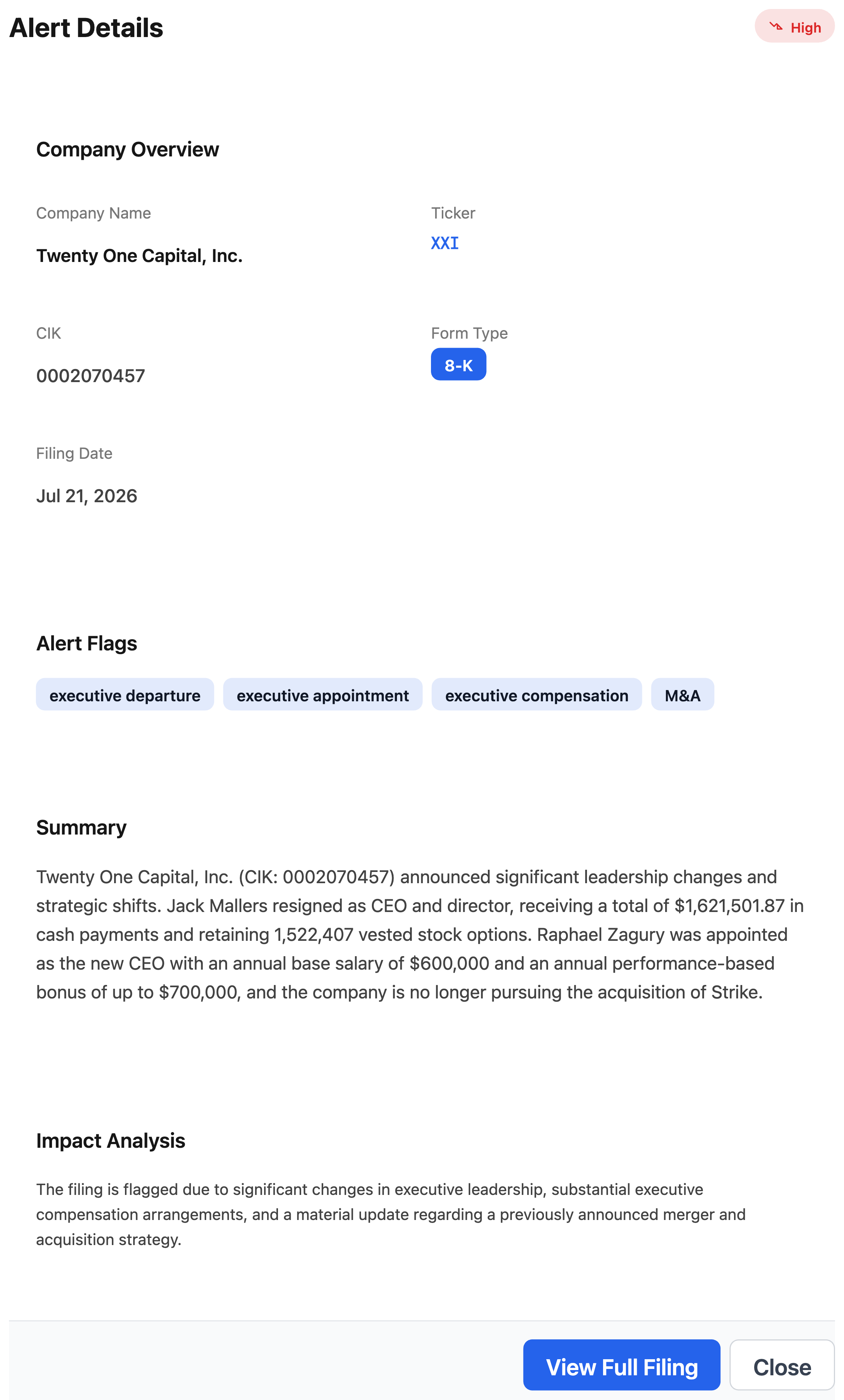
On July 21, 2026, Twenty One Capital ($XXI) filed an 8-K disclosing that Jack Mallers, the Strike founder who built the company into a bitcoin treasury vehicle, resigned as CEO and director effective July 20, walking away with $1,621,501.87 in cash payments and 1,522,407 vested stock options. A companion Form 4 landed the same day showing 307,253 shares of Class A common stock disposed at $5.23.
The wires ran it as a founder storming out. Reports pointed to a rift with the board and to the collapse of the three-way merger that would have folded Strike and Elektron Energy into Twenty One. The stock fell hard.
So here is the honest question, and it is not rhetorical: when a founder-CEO’s direct share count goes to zero on the same day he quits, is that a man dumping stock on the way out the door?
Read the Form 4 against the 8-K and the answer is no. But the reason is more interesting than the answer.
The arithmetic almost nobody ran
The separation agreement has four pieces. A final $50,000 fixed remuneration payment for July. A cash payment of $420,455.39 settling Mallers’ vested time-based restricted stock units. A cash payment of $1,151,046.48, less certain taxes, in consideration for the repurchase of 226,860 shares of Class A common stock. And 1,522,407 vested options he may exercise during the 90 days after his separation date. Everything unvested was forfeited for no consideration.
Now take the Form 4 number apart. Divide the $420,455.39 RSU settlement by the $5.23 per-share price and you get 80,393 shares. Add the 226,860 shares the company repurchased and you get 307,253.
That is the Form 4, exactly. Every single share in that disposition line is the separation agreement. The counterparty was Twenty One Capital, not the open market. Mallers did not sell a share to a public buyer.
The misconception this busts
A Form 4 disposition line looks the same whether the shares went to a broker, to the issuer in a negotiated buyback, or to the tax authority at vest. The form tells you the count and the price. It does not tell you who was on the other side or why. That is in the footnotes and, in this case, in a separate 8-K filed the same day.
NexusAlert’s own analysis got this right and said so on the face of the alert: the summary flags the disposition as bearish while naming the separation agreement as the driver, and the Impact Analysis adds the qualifier that matters, that the sale is not purely discretionary.
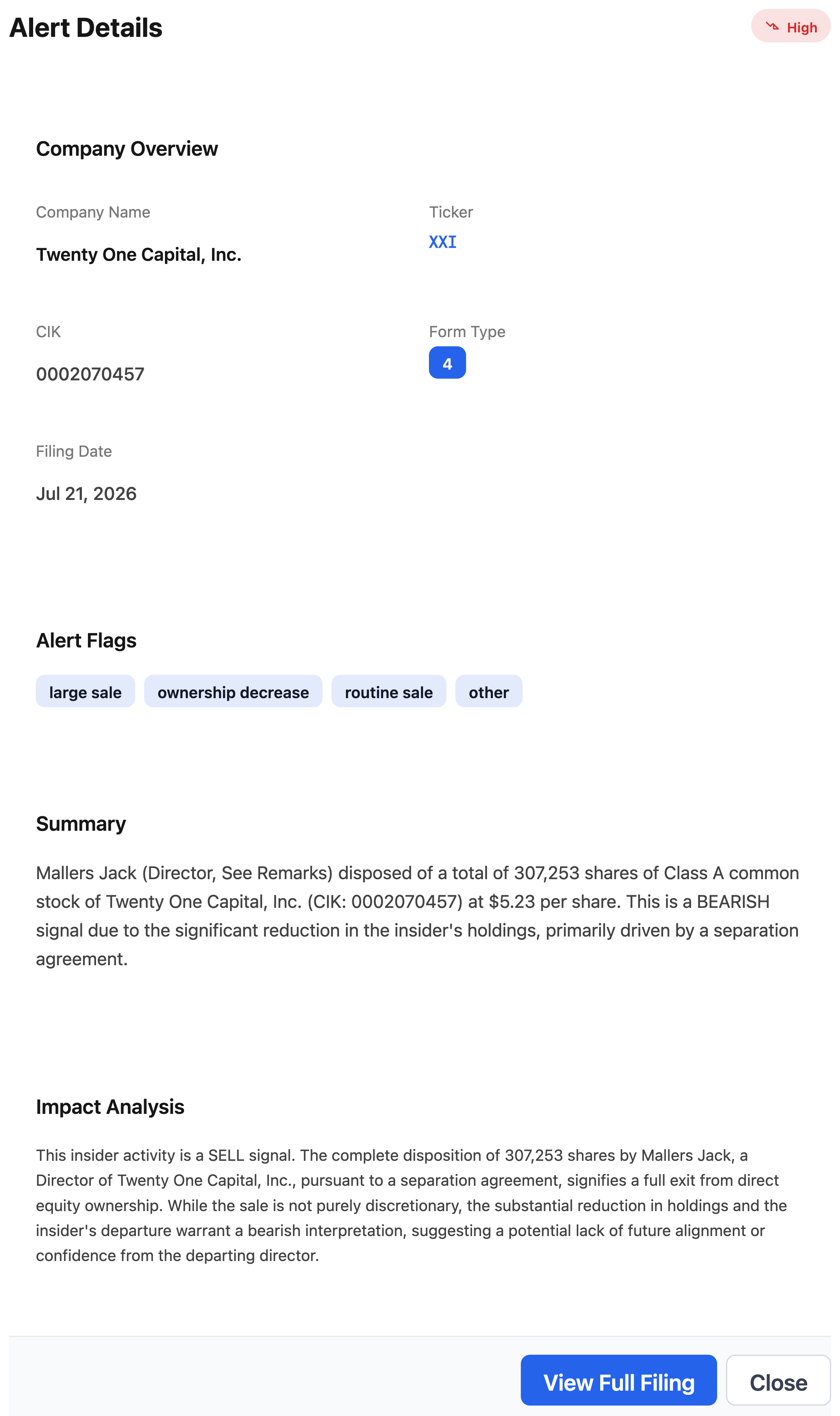
A resignation is an event. A separation agreement is a negotiation. The Form 4 tells you which one you are looking at, but only if you read past the minus sign.
The number that would have misled you
The Company Dossier shows Twenty One Capital at net insider flow of -$2.4M across 8 transactions, with officer-level sell value of $1.6M. Pulled out on its own, that reads like a management team heading for the exits.
It is not, and the Dossier itself shows why. The three notable Form 4 lines are all Mallers. Two are the July 20 separation dispositions, $1.2M and $420K. The third, -$796K from April 12, is labeled Tax Withholding: shares held back at vest to cover the tax bill, which is a mechanical event, not a decision to sell. There is no Form 144 on file, meaning no insider at this company has filed notice of planned selling in this period or the trailing 90 days.
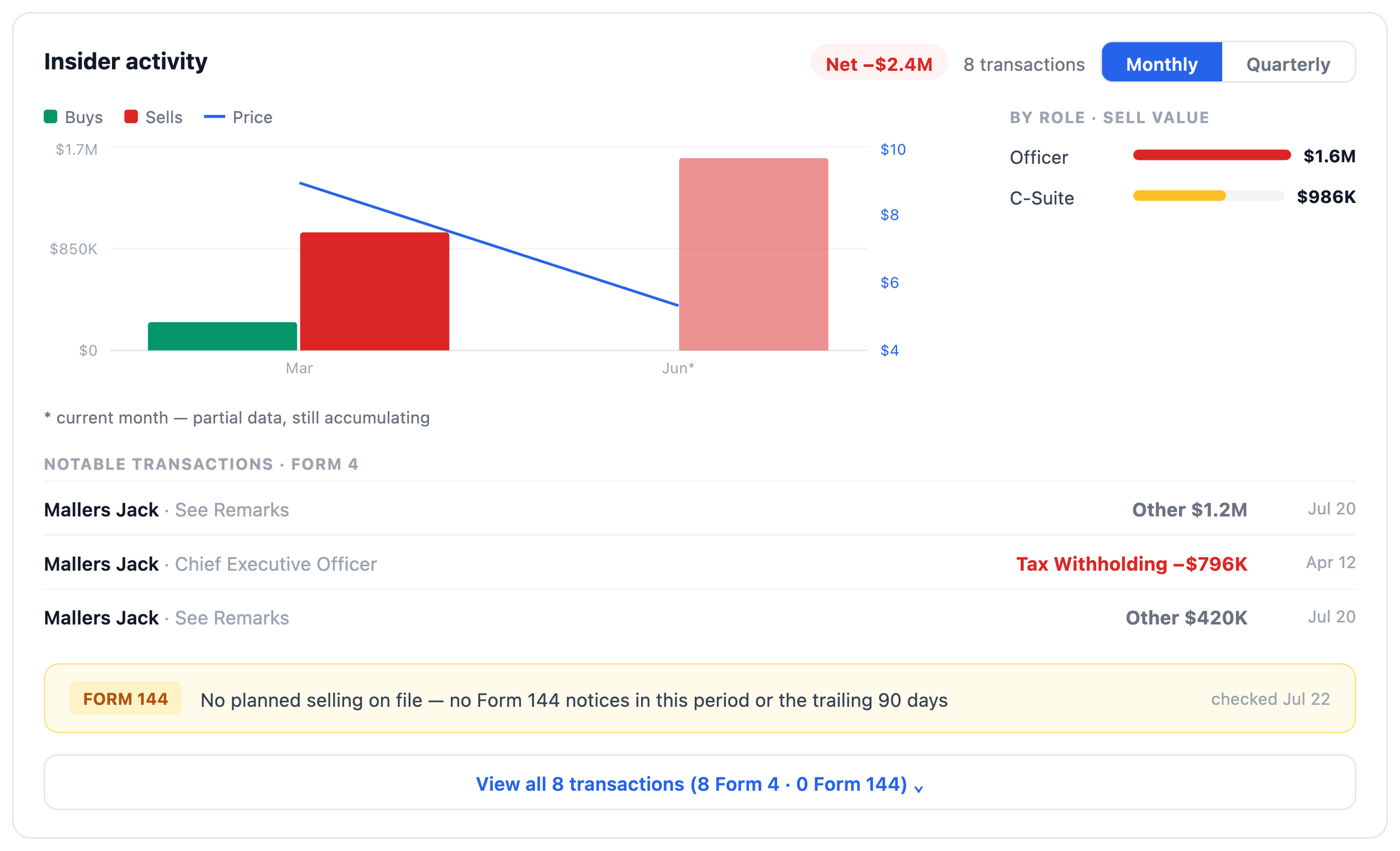
Strip out the tax withholding and the negotiated buyback and the discretionary open-market selling at Twenty One Capital rounds to nothing. The -$2.4M is real as an accounting fact and misleading as a conviction signal.
The bigger pattern is governance, not selling
If there is a caution here, it is not the exit. It is the churn around it. The Dossier counts 38 filings in the last twelve months, and 7 of them are Director/Officer changes. That is a leadership bench being rebuilt at speed.
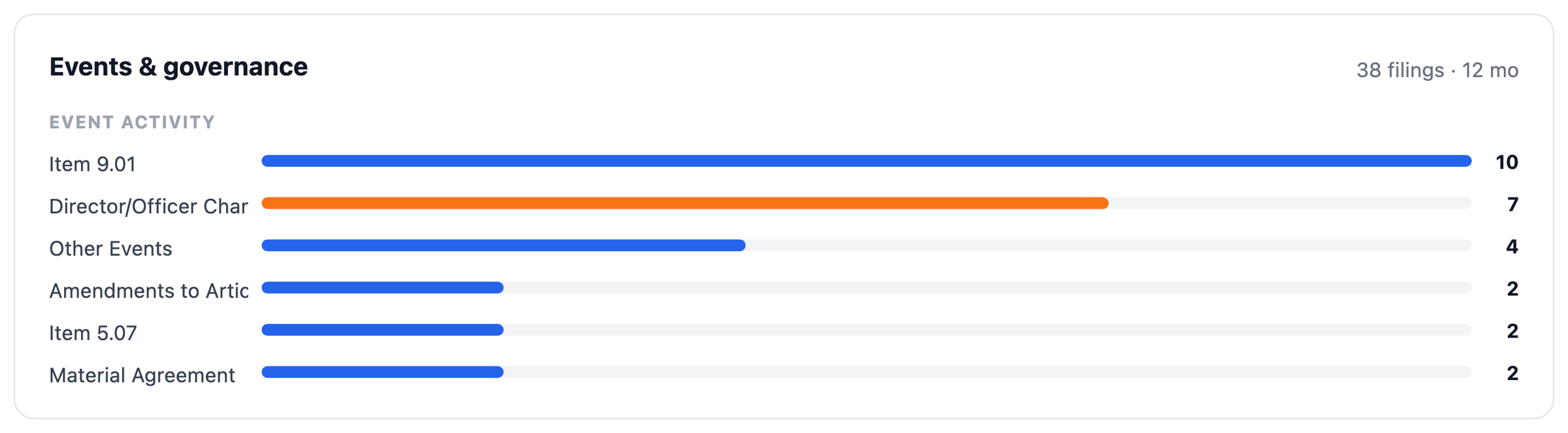
The same 8-K carries the rest of it. Raphael Zagury, a board member since December 2025, takes the CEO seat at a $600,000 base salary with a bonus of up to $700,000. Committee seats were reshuffled on July 15, with Zagury stepping off the Audit, Nominating and Compensation committees and three directors moving in. The company confirmed it is no longer pursuing the acquisition of Strike.
And one line that most coverage skipped entirely: Twenty One is still considering an acquisition of Elektron Energy, and Zagury is the CEO of the entity that manages it. The filing states the dollar value of that transaction is not yet determinable. The incoming CEO sits on both sides of the deal the company is still weighing.
That is the disclosure worth your attention, and it is nowhere near the headline.
What to watch
The scoring backs up the caution without overstating it. Financial Strength sits at 3.6 out of 10, in the bottom 36% of companies NexusAlert scores. Earnings Quality is 5.1, squarely average. Three of the five pillars, including Governance and Insider Conviction, are not rated at all, because a company this young has too thin a proxy and transaction record to score. The absence of a grade is its own information.
Track the Elektron terms when they are filed, and track whether the Director/Officer change count keeps climbing. Those decide the outcome. The founder’s payout does not.
NexusAlert fired two correlated High severity alerts on this company on the same day, one governance 8-K and one insider Form 4, and named the separation agreement as the mechanism rather than shipping a bare bearish flag. That pairing is the difference between knowing a founder left and knowing what actually changed hands. Read the whole filing, not the headline.
Create a free NexusAlert account
Sources
- Twenty One Capital Form 8-K, filed July 21, 2026 (Item 5.02 separation agreement, CEO appointment, Item 8.01 committee changes and Strike)
- CoinDesk, “Jack Mallers steps down as XXI Capital CEO as Tether’s plans to merge three bitcoin firms falls”
- Yahoo Finance, “Jack Mallers Quits Twenty One Capital as Tether’s Bitcoin Merger Collapses”
- Decrypt, “Jack Mallers Quits Twenty One Capital as Tether’s Bitcoin Merger Collapses”
- CryptoSlate, “Jack Mallers leaves Twenty One as Strike tie-up ends and Bitcoin treasury pressure builds”
- Crypto Briefing, “Jack Mallers steps down as CEO of Twenty One Capital, Raphael Zagury takes the helm”
Prefer to own it outright? NexusAlert lifetime access is available for a one-time payment of $299 — no subscription, no recurring charges, all future Pro features included. Learn more →