
Alphabet's 13F Reveals a $94 Billion SpaceX Bet, 95% of Its Portfolio
Alphabet's 13F-HR shows 95% of its $99.1 billion reported portfolio, $94.2 billion, sits in one stock: SpaceX. Analysis by NexusAlert.
Google’s parent just showed its hand, and it is almost entirely one stock
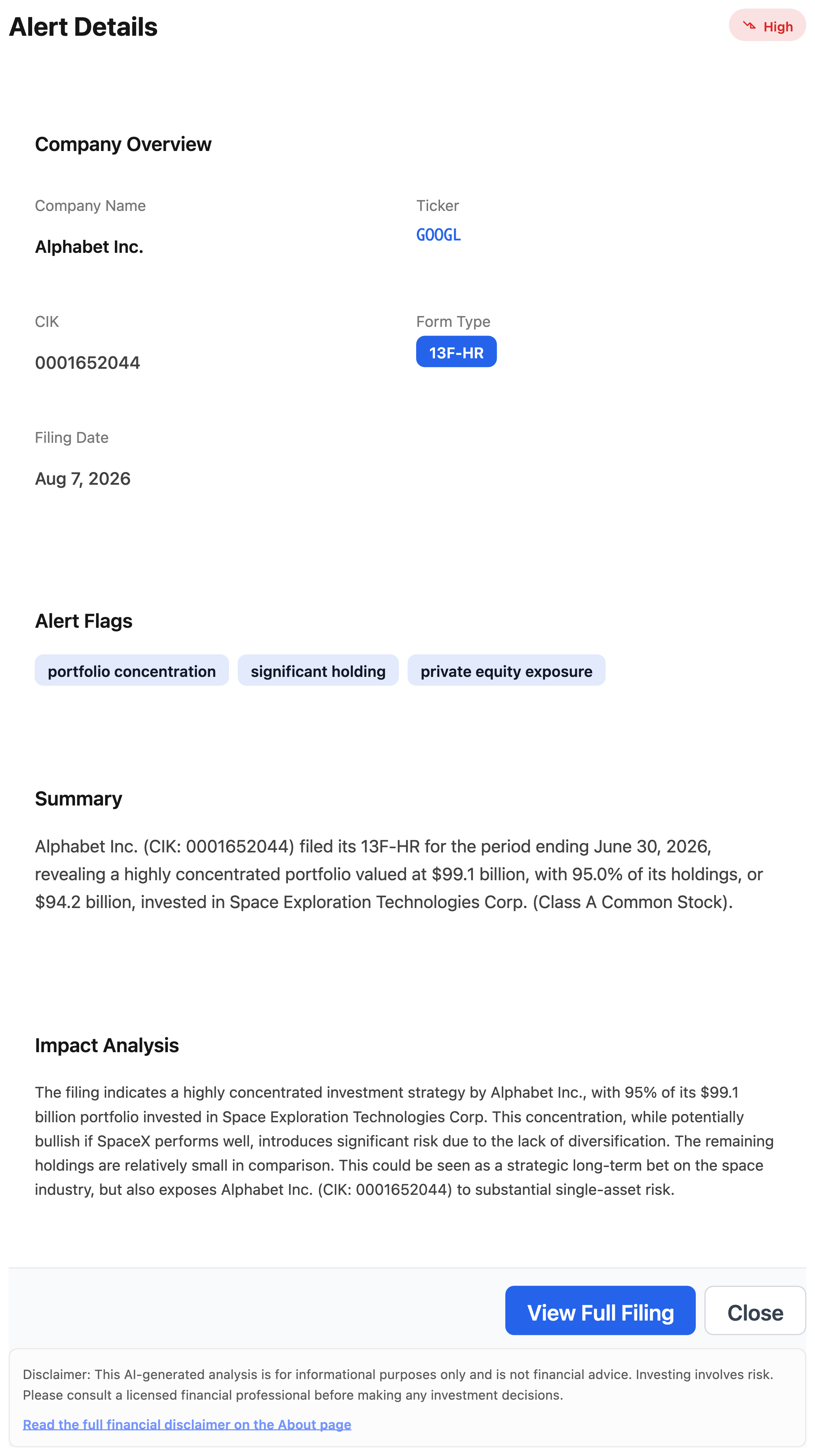
Alphabet filed a 13F-HR for the quarter ending June 30, 2026, and the number inside it is hard to believe. Of a $99.1 billion reported portfolio, 95.0% ($94.2 billion) sits in a single name: Space Exploration Technologies, better known as SpaceX.
That is roughly 551 million SpaceX Class A shares, the position Alphabet marked to market for the first time after SpaceX went public in June. It traces back to a bet of about $1 billion that Google placed alongside Fidelity in 2015, when SpaceX was valued near $12 billion. Today that check is worth close to 100 times what went in.
NexusAlert flagged the filing the same morning it hit EDGAR, tagged it High severity, and labeled it exactly what it is: portfolio concentration, significant holding, private equity exposure.
So is Alphabet making a reckless single-stock bet? Not exactly
Here is the part the headline number hides. A 13F-HR only lists a manager’s 13(f)-eligible holdings, mostly public equities. Before June, SpaceX was private, so it did not appear on any Alphabet 13F at all. The moment it IPO’d, a decade-old venture stake got dropped onto the public ledger at market value, and it instantly dwarfed everything else Alphabet reports there.
So the 95% figure is not the story of a portfolio manager going all in this quarter. It is the story of one early venture bet growing so large that it swallowed the rest of the reported book. That is a very different risk than a fund actively rotating 95% of fresh capital into one ticker.
It is also mostly paper. Alphabet disclosed that roughly $80 billion of the stake is under short-term post-IPO lockups, with another $14.1 billion restricted through the third quarter of 2027. Alphabet cannot sell most of it yet even if it wanted to.
The bigger pattern: a fortress balance sheet holding one enormous, illiquid bet
This is where reading the whole company, not just the one filing, pays off. Pull up the Alphabet Company Dossier in NexusAlert and the tension jumps out.
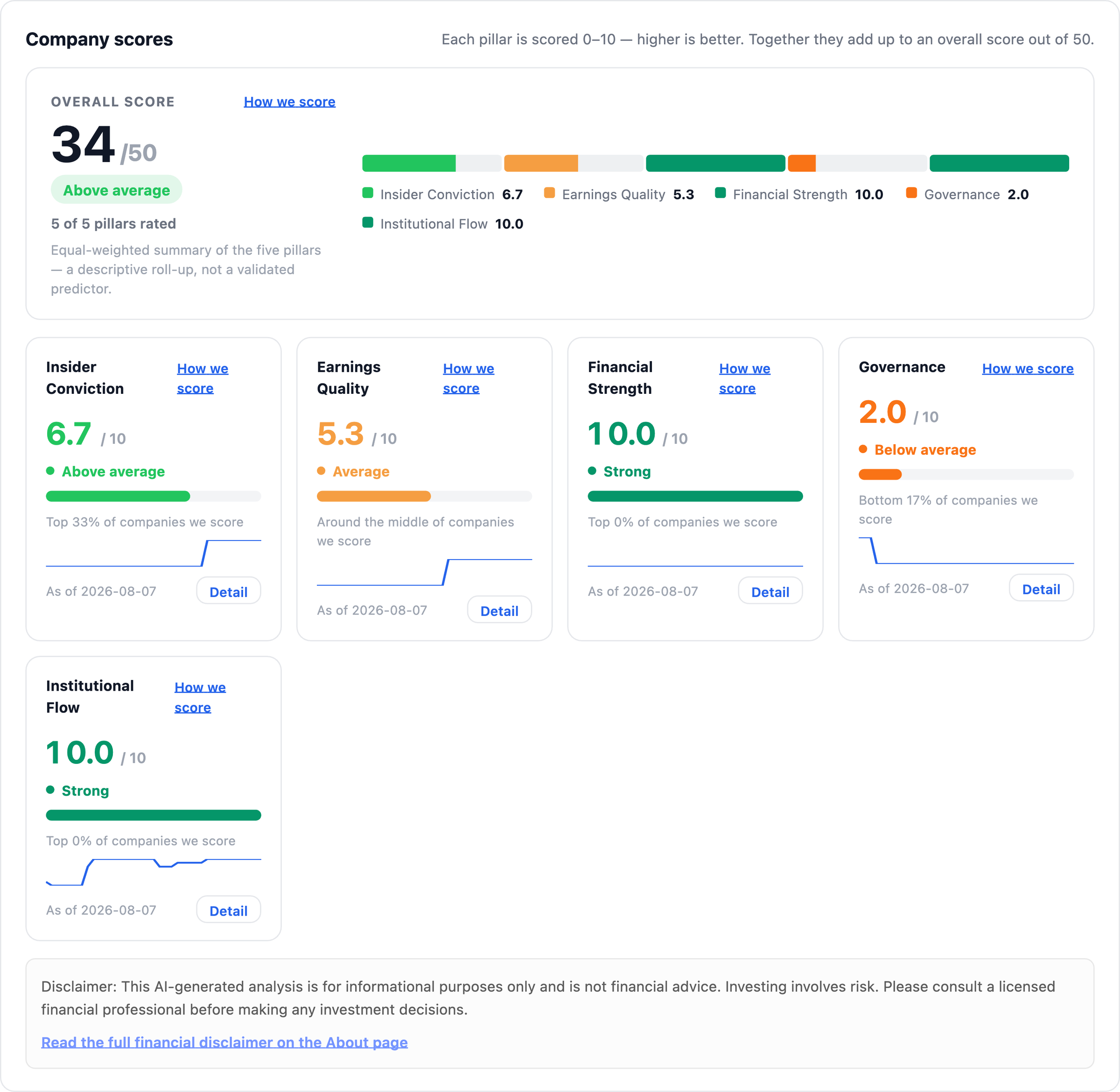
Alphabet rates a perfect 10.0 on Financial Strength (top tier) and 10.0 on Institutional Flow, which fits a company sitting on a $94 billion unrealized windfall and a balance sheet few can match. Yet Governance scores just 2.0, in the bottom 17% of companies NexusAlert scores. A fortress that also carries a single position larger than the entire market cap of most public companies is exactly the split that scorecard is meant to catch.
None of this makes the SpaceX stake bad. A 100x return is the trade of the decade by almost any measure. But size, illiquidity, and mark-to-market swings now travel with it. When SpaceX moves, a meaningful slice of Alphabet’s reported equity value moves too, and Alphabet cannot hedge or trim most of it until the lockups roll off.
The lesson: read the whole filing, not the headline
A 13F-HR does not show what a company believes. It shows what a company is holding. And this one shows Alphabet holding one of the most concentrated public-market positions in corporate history, hidden inside a filing most investors never open.
That is the entire reason NexusAlert exists. A single line in a dense institutional filing can tell you more about a company’s real risk appetite than a whole earnings call, but only if something reads it the moment it lands and tells you what changed.
Create a free NexusAlert account and let the AI read the filings so you do not have to.
Sources
- Alphabet’s 13F-HR, NexusAlert Alert Details
- Google reports $94 billion stake in SpaceX following historic IPO, Yahoo Finance
- Alphabet Just Revealed a $94 Billion Stake in SpaceX, and It Can’t Sell a Single Share Yet, The Motley Fool
- Google Discloses $94 Billion in SpaceX Shares Following IPO, Bloomberg
- Google discloses $94.1 billion SpaceX stake in Q2 filing, Quartz
Prefer to own it outright? NexusAlert lifetime access is available for a one-time payment of $299 — no subscription, no recurring charges, all future Pro features included. Learn more →