
Sea Limited Insiders Sold Into a Rally. Only One Sale Was a Real Signal.
Six Sea Limited insiders filed Form 4 sales in a single week. Five were pre-arranged 10b5-1 trades. Here is how to tell a scheduled sale from a conviction sale.
A director at the company behind Shopee and Free Fire sold $2.4 million of stock near its highs
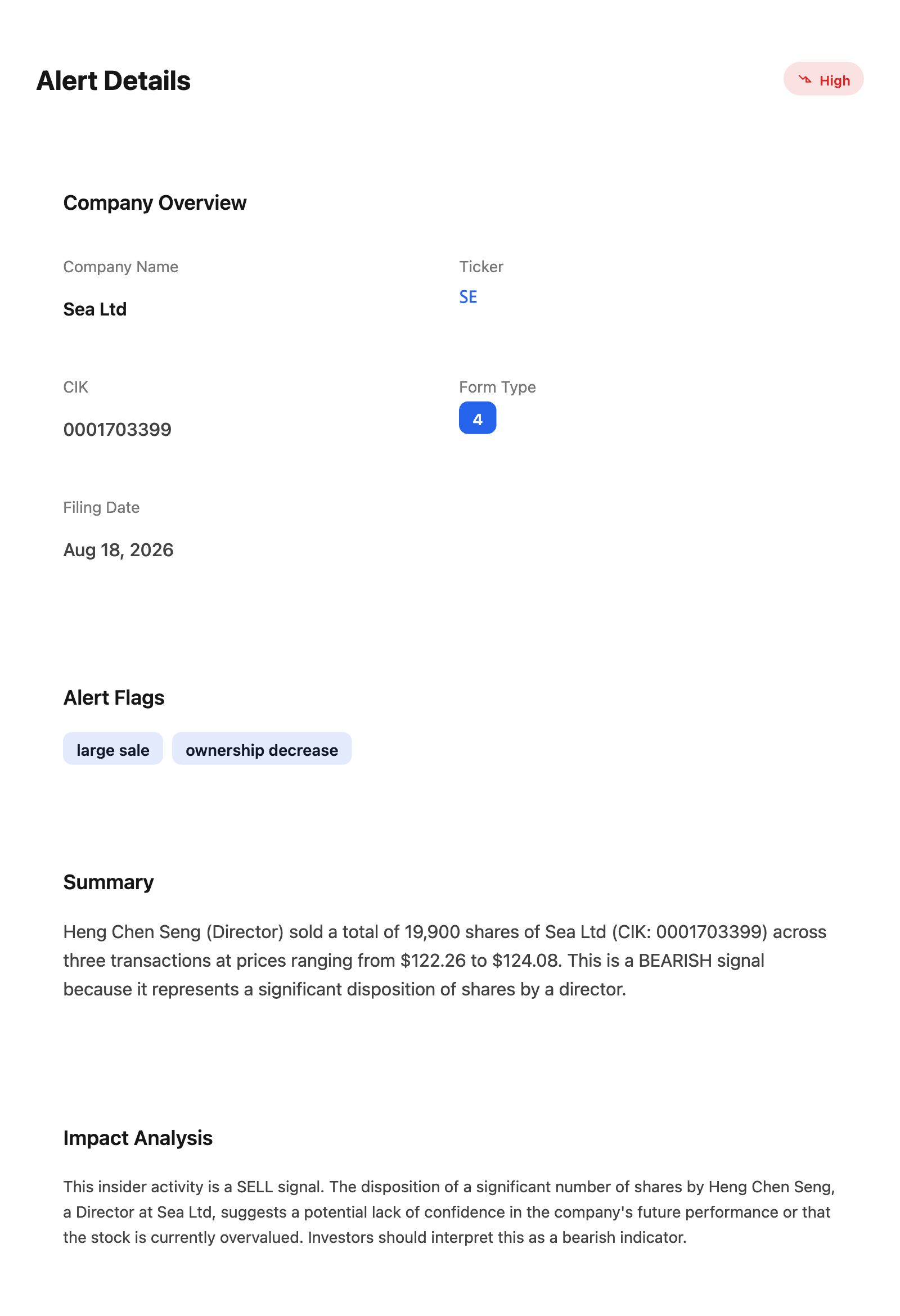
Heng Chen Seng, a director at Sea Limited ($SE), sold about 20,000 Class A shares on August 14 for roughly $2.4 million, within a dollar of the stock’s recent high. The sale hit three price points, 19,138 shares at $122.26, 764 at $123.29, and 98 at $124.08, and it was a plain open-market disposition. Sea is the Singapore-based parent of Shopee in e-commerce, Garena and Free Fire in gaming, and SeaMoney in fintech, so its filings get read closely by retail investors.
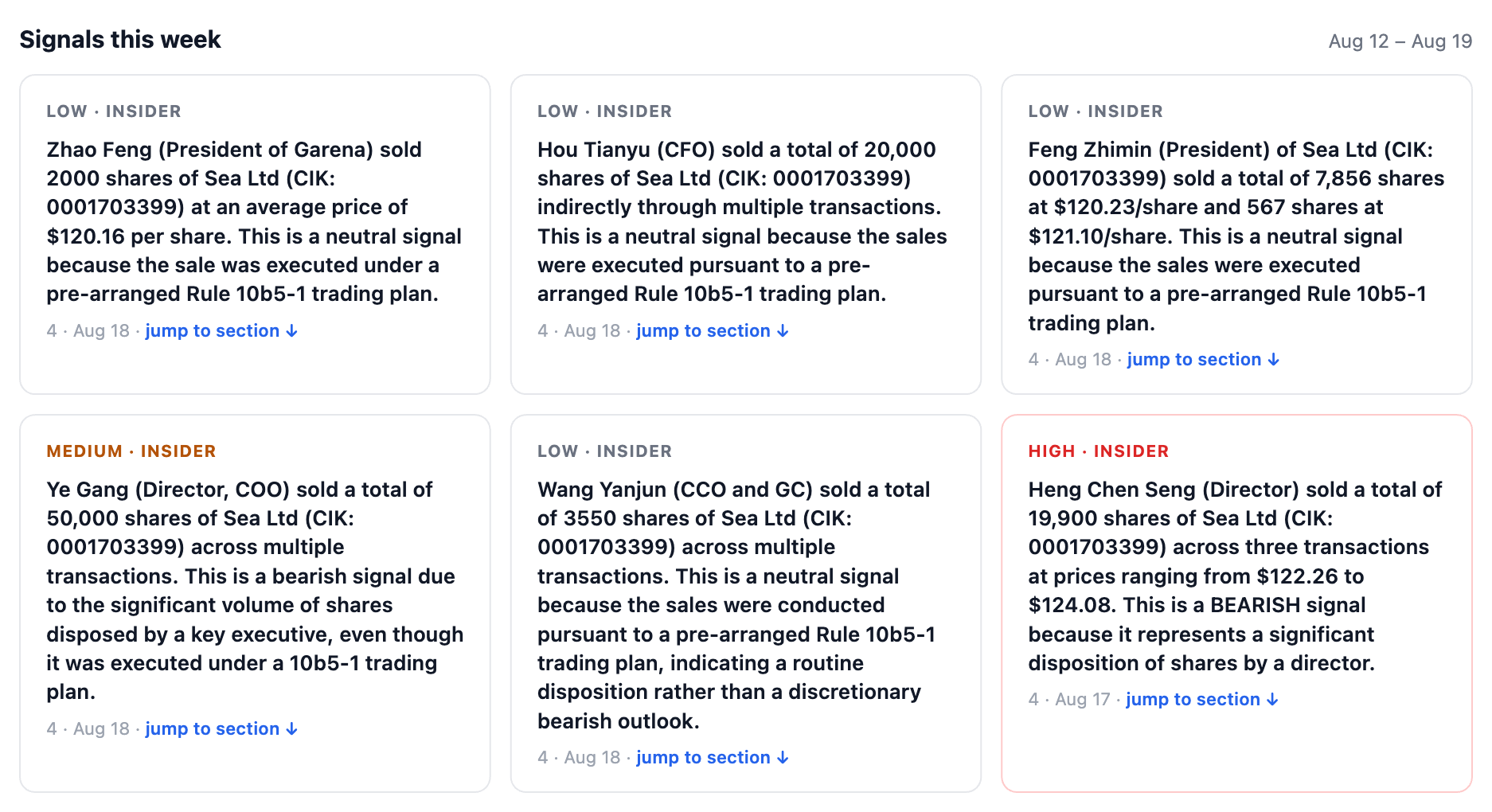
And he was not alone. In the same week, five more Sea insiders filed Form 4 sales: the chief operating officer, the chief financial officer, the president of Garena, another president, and the chief compliance officer. On a stock screener, that looks like the whole executive bench heading for the exits.
So is a wall of insider selling a red flag? Not the way it looks
Here is the trap. Six insider sales in one week reads as panic. But a Form 4 “Sale” line does not tell you why the shares moved until you read the transaction code and the footnotes. Most of these did not represent anyone changing their mind about the company.
Five of the six sales were executed under pre-arranged Rule 10b5-1 trading plans. A 10b5-1 plan is a schedule an insider sets months in advance, often for tax, estate, or diversification reasons. Once it is set, the trades fire automatically on their dates whether the insider feels bullish or bearish that morning. Chief operating officer Ye Gang, a co-founder, sold about $4.6 million under a plan he put in place back in September 2025, and he still holds roughly 21.6 million shares worth billions. That is not the profile of someone fleeing.
The president of Garena, the CFO, and the others sold small blocks the same way, on schedule. NexusAlert read each filing’s context and graded them accordingly, tagging the planned sales as Low or Medium severity and neutral, not as a bearish stampede.
The one that actually counts
Out of the whole cluster, the Heng Chen Seng sale is the only one that was not on a plan. It was a discretionary, open-market decision to sell near the high, and that is why it carries more weight than the other five combined. Even so, context matters here too: he still held 164,904 shares after the sale, so this is a trim, not a full exit.
There is a reason the timing looks aggressive. Sea reported second-quarter results on August 11, and the numbers were strong. First-half revenue rose 48% to $14.9 billion. The stock actually climbed after the print. Insiders trimming into strength is worth noting, but “trimming into strength” and “losing faith” are very different stories, and only one of them is bearish.
A wall of insider sales is not the same as a wall of conviction. One scheduled trade is noise. One discretionary sale near the high is the line worth reading.
The lesson: read the whole filing, not the headline
The number that would have scared you here, six insiders selling in a week, dissolves the moment you read the transaction codes. Five were pre-planned. One was real, and even that one was a trim by a director who still holds six figures of stock. The signal was never in the total dollars sold. It was in the classification of each line.
That is exactly what NexusAlert is built to surface. Instead of a single alarming “insiders sold” figure, it reads every Form 4, checks the transaction code and footnotes, and separates the scheduled 10b5-1 trades from the discretionary ones, so you see the one sale that matters instead of six that mostly do not. The per-company Company Dossier stacks that insider activity next to institutional flows, filing tone, and financials on one page.
Create a free NexusAlert account and see how the alerts read a filing before you have to.
Sources
- SEC EDGAR: Sea Limited Form 4, Heng Chen Seng (filed 2026-08-18)
- StockTitan: Sea Ltd director unloads 20,000 shares in August sale
- The Motley Fool: Sea Limited COO Ye Gang Sells 40,000 Shares for $4.6 Million (10b5-1 plan)
- The Motley Fool: Sea Limited Insiders Trimmed Into a Strong Quarter
- Yahoo Finance: Sea Limited Director Heng Chen Seng Sells 20,000 Shares for $2.4 Million
Prefer to own it outright? NexusAlert lifetime access is available for a one-time payment of $299 — no subscription, no recurring charges, all future Pro features included. Learn more →