
Starboard Just Crossed 10% of BILL Holdings. It Did Not Buy a Single New Share.
Starboard Value and Jeffrey C. Smith filed Form 3s on August 31 disclosing over 10% ownership of BILL Holdings. The filing's own footnote says the crossing came from BILL's buyback, not new buying.
Starboard just crossed 10% of BILL Holdings
On August 31, 2026, Starboard Value LP and its well known activist Jeffrey C. Smith each filed a Form 3 disclosing they had crossed the 10% ownership threshold at BILL Holdings, Inc., the small business bill pay software company millions of accountants and finance teams use every month. The combined position: 8,639,900 shares and share equivalents. $BILL is the kind of consumer facing fintech brand that makes an activist headline land.
The obvious read: a famous activist just built a bigger stake and is about to turn up the pressure. That read is wrong, and the filing says so in its own footnote.
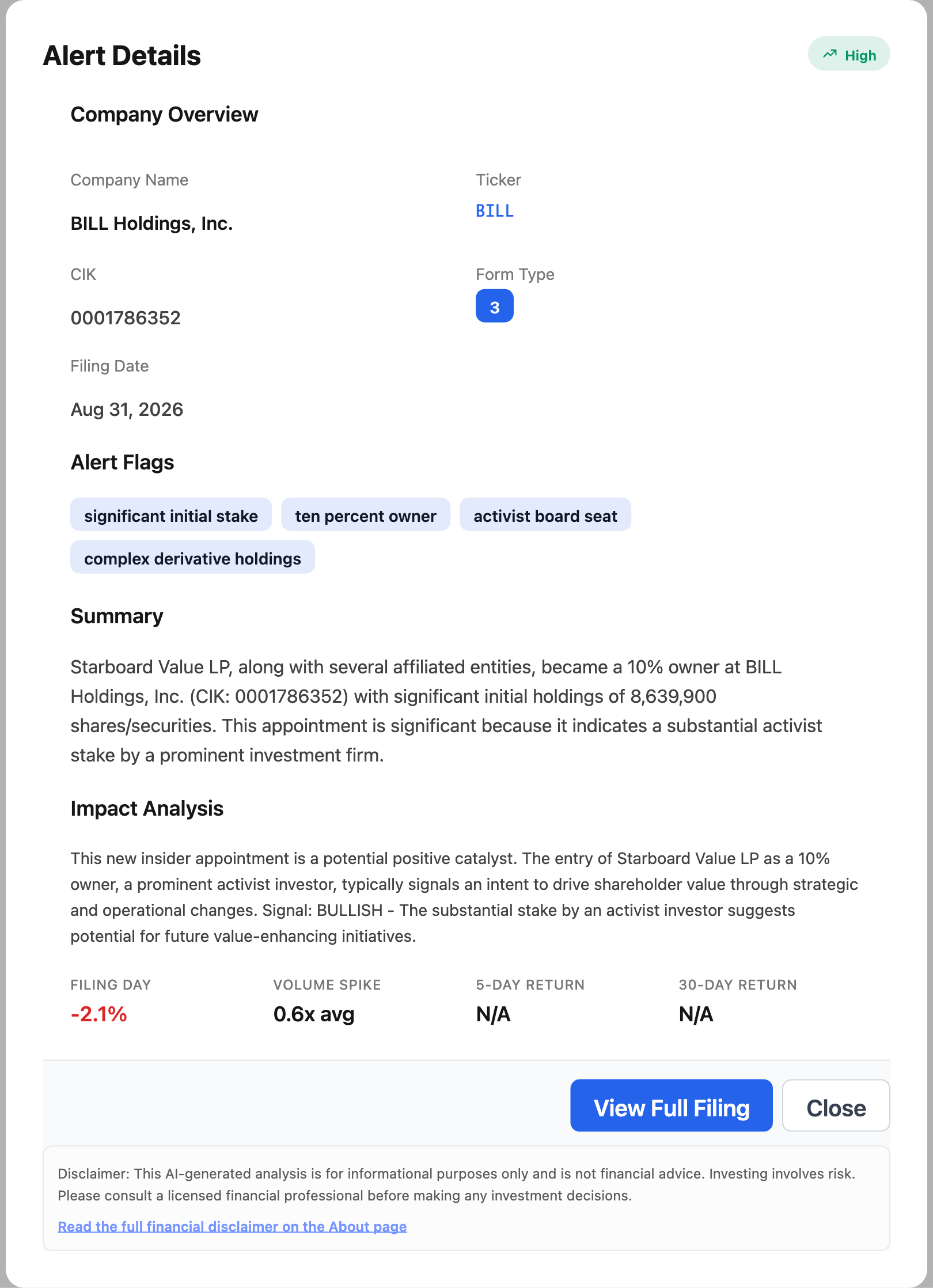
What the filing actually says
Starboard is not a new name at BILL. The fund built a roughly 8.5% stake in 2025, threatened a board fight, and in October 2025 settled it: BILL added four new directors, including Starboard partner Peter Feld, and Starboard agreed to a standstill. That is old news, and it is not what happened on August 31.
What happened is a Section 16 formality. The Form 3 footnote is explicit: “This Form 3 is being filed solely due to a decrease in the number of the Issuer’s outstanding shares of Common Stock, and not as a result of any acquisition by the Reporting Persons.” Starboard’s position did not grow. BILL’s own share count shrank underneath it.
The math checks out against BILL’s public buyback. On May 7, 2026, BILL reported its first GAAP profitable quarter and announced a $1.0 billion share repurchase authorization. Months of buying back stock reduces the shares outstanding, which is the denominator in every ownership percentage. Starboard held the same shares. The company just got smaller around them.
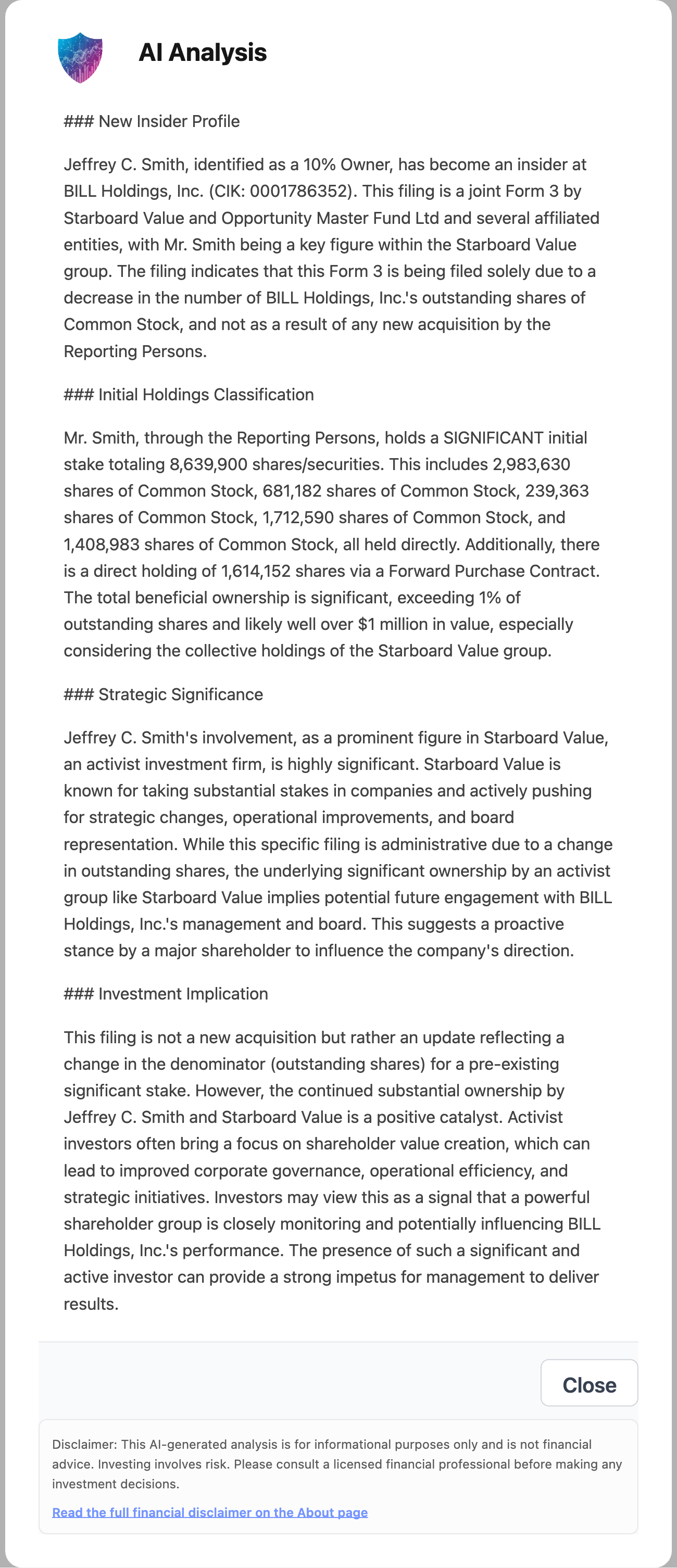
Bust the misconception
A Form 3 announcing a brand new 10% owner usually means a hedge fund just built a position and a campaign is starting. That is the pattern that made past Starboard headlines, like “Starboard Value Takes a Hefty 8% Stake in BILL Holdings,” land hard in 2025. This filing looks identical on the surface: same fund, same company, a bigger percentage. The instinct is to read it the same way.
The instinct is wrong here, and the filing tells you why if you read past the checkbox. Starboard’s underlying stake is 8,639,900 shares and share equivalents, split across five Starboard funds holding 7,025,748 shares directly and a forward purchase contract with Nomura covering another 1,614,152 shares that settles by December 21, 2026. None of those numbers moved on August 31. Only BILL’s own share count did.
Starboard’s stake did not grow. BILL’s buyback did the shrinking.
The bigger pattern
Starboard is not sitting on the sidelines either way. Trade press has reported the fund pushing BILL toward “Rule of 40” profitability targets since the 2025 settlement, and BILL has followed with the buyback and a reported workforce reduction. Read that way, this filing is closer to evidence the cooperation agreement is working than a sign a new fight is starting.
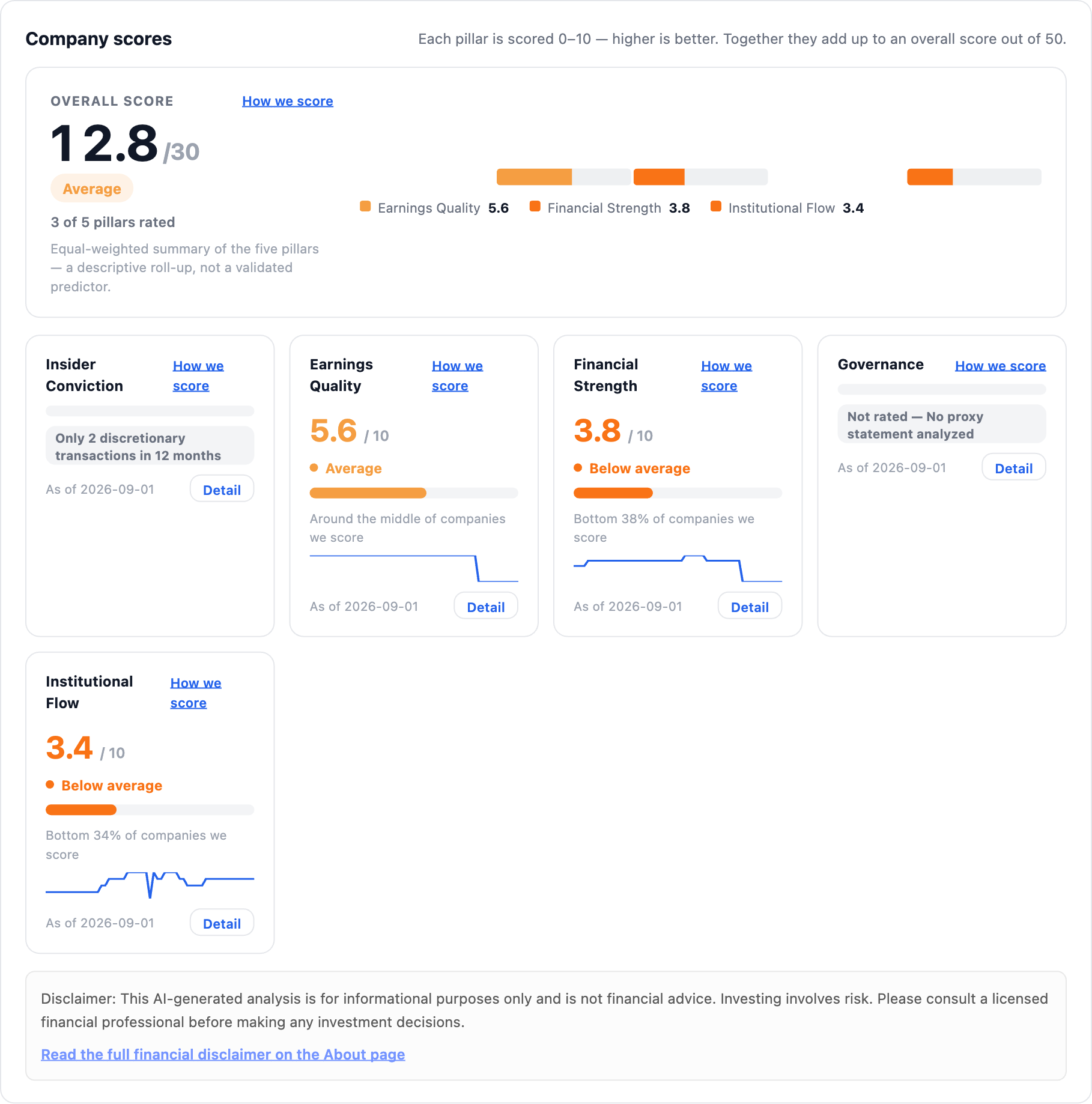
NexusAlert’s Company Dossier adds the context a bare ownership filing cannot. BILL’s Financial Strength score sits at 3.8 out of 10, in the bottom 38% of companies scored, and Institutional Flow is 3.4, in the bottom 34%, both weak enough to explain why an activist stayed engaged in the first place. Governance is unrated because no proxy statement has been analyzed since the 2025 settlement, which is itself worth watching for the next one. Institutional ownership separately sits at 10.8%, flat, across just two 13F filers, a small, thin base that has nothing to do with Starboard’s Section 16 position.
What to watch
The lesson is not specific to BILL or Starboard. Any Section 16 filer, insider, fund, or 10% owner group can cross a reporting threshold purely because a company’s own buyback shrank the float underneath them. The filing form looks the same whether the reporting person bought a single share or bought nothing at all. The only way to tell the difference is the footnote, and most people never scroll that far.
That is the whole reason to open the primary document instead of reacting to the headline. NexusAlert flagged both Form 3s High severity the day they posted, named Starboard and Jeffrey C. Smith, and surfaced the exact footnote that separates a real accumulation story from routine paperwork. Read the whole filing, not the headline.
Create a free NexusAlert account
Sources
- Starboard Value LP Form 3, BILL Holdings, Inc., filed August 31, 2026 (SEC EDGAR)
- Jeffrey C. Smith Form 3, BILL Holdings, Inc., filed August 31, 2026 (SEC EDGAR)
- BILL Reports Third Quarter Fiscal Year 2026 Financial Results and Announces $1.0 Billion Share Repurchase Authorization (May 7, 2026)
- BILL Announces Addition of Four New Directors, cooperation agreement with Starboard Value (October 16, 2025)
- Starboard to launch BILL Holdings board challenge after building 8.5% stake (Hedgeweek, 2025)
- Bill to cut workforce, reported alongside Starboard engagement (Payments Dive)
Prefer to own it outright? NexusAlert lifetime access is available for a one-time payment of $299 — no subscription, no recurring charges, all future Pro features included. Learn more →