
Beyond Meat's 1-for-30 Reverse Split Buys Time, Not a Turnaround
Beyond Meat ran a 1-for-30 reverse split on August 13 to hold its Nasdaq listing by August 31. Here is what the filing really signals. Analysis by NexusAlert.
Beyond Meat just turned every 30 shares into 1
Beyond Meat $BYND executed a 1-for-30 reverse stock split at 11:59 p.m. Eastern on August 13, 2026, and the stock began trading on a split-adjusted basis the next morning under the same ticker with a new CUSIP. Thirty shares became one. A position that showed 3,000 shares on Wednesday showed 100 on Thursday, at roughly thirty times the price.
The math is neat. The question every holder should ask is whether anything actually changed.
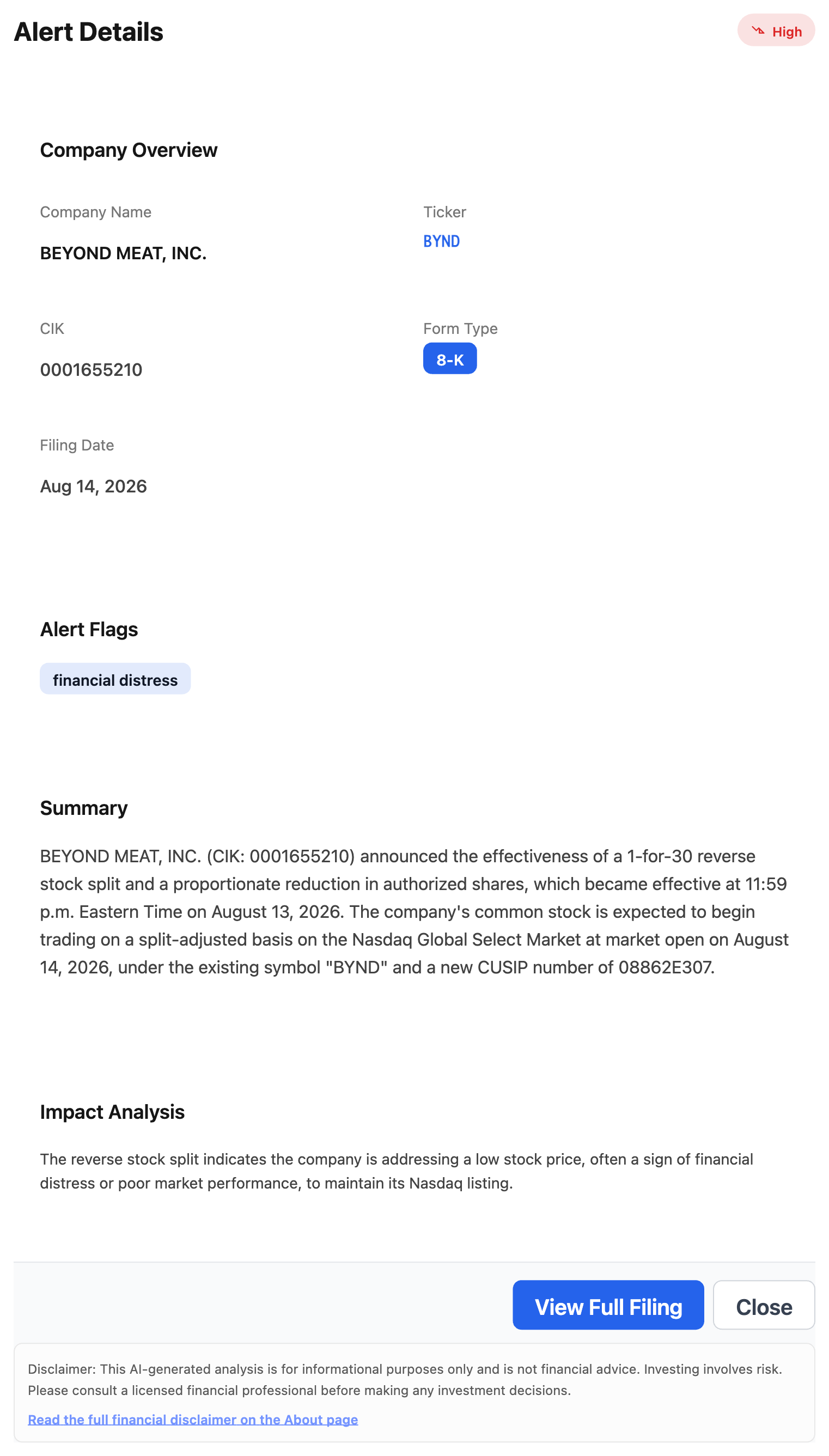
What the filing says
The 8-K is short and specific. Every 30 shares of common stock outstanding were combined into a single share, with a proportionate reduction in authorized shares and no fractional shares issued. Split-adjusted trading opened August 14, 2026 on the Nasdaq Global Select Market under the existing symbol BYND and a new CUSIP number of 08862E307.
The reason is spelled out too. Beyond Meat needs its closing bid price to sit at or above $1.00 for at least 10 consecutive business days before its Nasdaq compliance deadline of August 31, 2026. Pre-split, the stock was trading near $0.41. Multiply a 41-cent share by 30 and you clear the dollar threshold on paper without the business doing anything at all.
A reverse split changes the price tag, not the product
Here is the misconception worth busting. A reverse split is arithmetic, not a turnaround. It does not add a dollar of revenue, retire a dollar of debt, or sell another pound of plant-based protein. It reprices the same company into fewer, more expensive shares so the quote clears an exchange rule.
A reverse split changes the price tag, not the product.
Companies with healthy fundamentals rarely need one. When a household name reaches for a 1-for-30 ratio to stay listed, the ratio itself is the tell. The bigger the number, the deeper the hole the share price had to climb out of.
The scoreboard the split can’t reset
This is where the filing and the fundamentals separate. NexusAlert’s Company Dossier scores $BYND at 11.1 out of 40 across the pillars it can rate, a below-average read, and the individual pillars tell the story a higher share price hides.
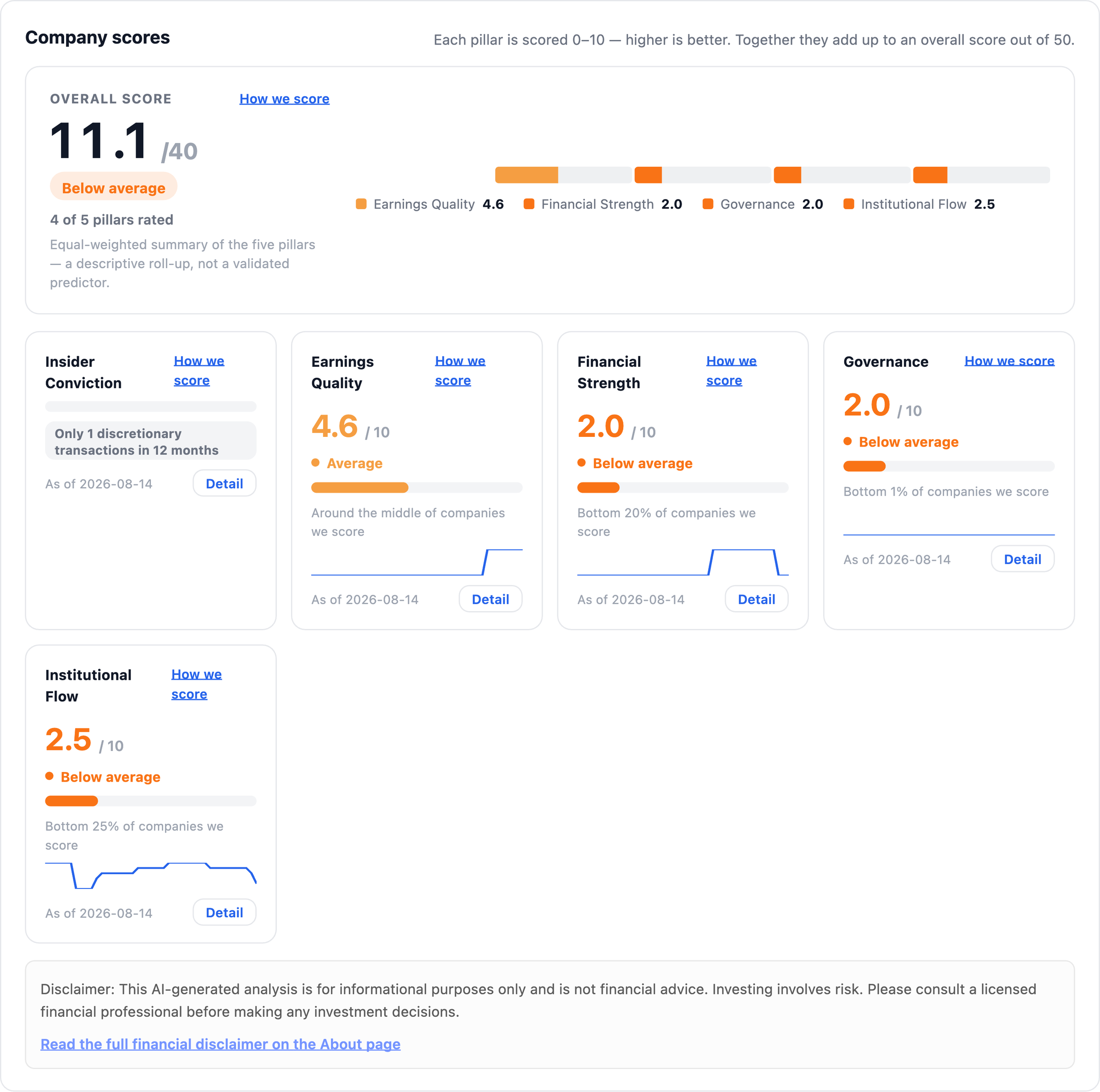
Financial Strength scores 2.0 out of 10, bottom 20% of companies. Governance scores 2.0, bottom 1%. Institutional Flow sits at 2.5, bottom 25%. None of those move because the share count shrank. The reverse split resets the price. It does not reset the scoreboard.
Smart money was already trimming
The institutional picture points the same direction. Only 7.1% of $BYND is held by 13F filers, and the largest holders were reducing into the split, not adding.
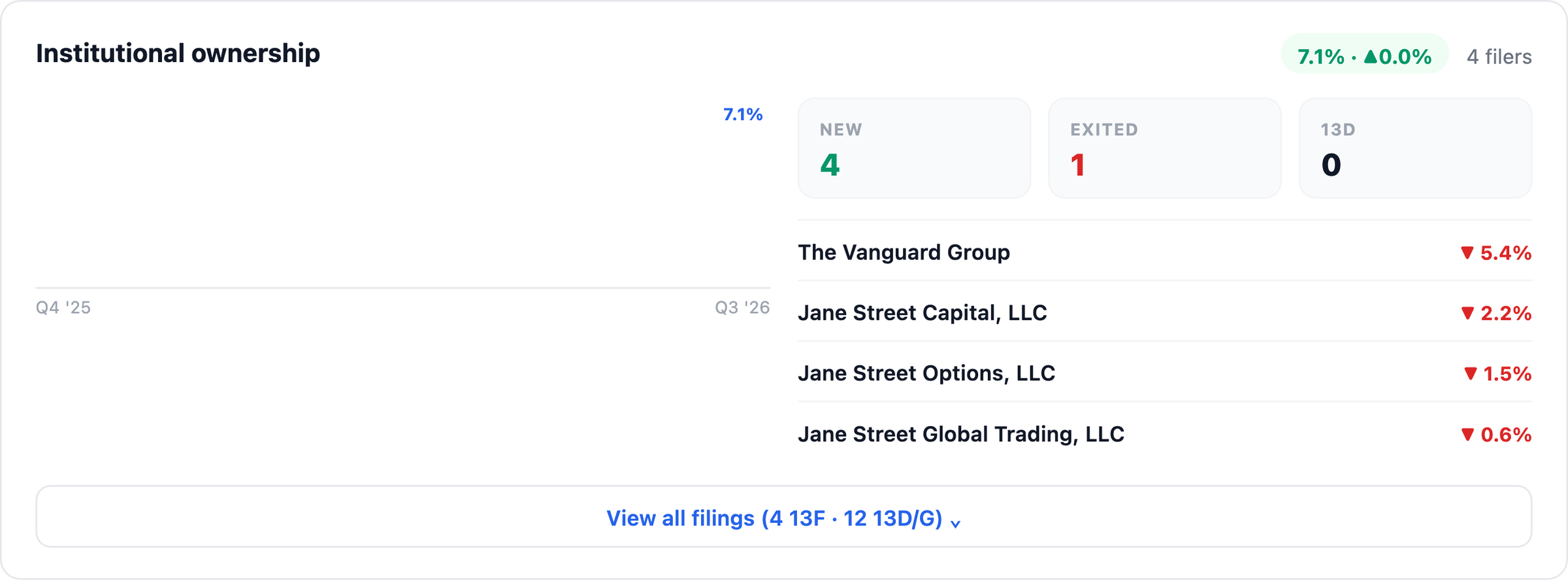
The Vanguard Group cut its position 5.4%. Three Jane Street entities all trimmed. When the biggest institutional names are stepping back while retail cheers a higher sticker price, that gap is worth noticing.
The lesson
A reverse split is a headline that looks like good news and reads like a warning once you open the filing. The dollar-sign math is designed to be reassuring. The 8-K behind it, the distress flag, and the scores are where the real signal lives.
That gap between the headline and the filing is exactly why NexusAlert exists. It reads every 8-K, Form 4, and 13D the moment it posts, tags the risk, and puts a company’s insider, institutional, and governance data on one page so you can judge the event in context instead of reacting to a ticker.
Read the whole filing, not the price tag.
Create a free NexusAlert account
Sources
- Beyond Meat Announces Effectiveness of 1-for-30 Reverse Stock Split (GlobeNewswire, Aug 14, 2026)
- Beyond Meat Announces 1-for-30 Reverse Stock Split (GlobeNewswire, Aug 11, 2026)
- Beyond Meat Stock Falls After Announcing 1-for-30 Reverse Stock Split (Benzinga)
- Beyond Meat sets 1-for-30 reverse stock split, BYND 8-K filing (StockTitan)
- NexusAlert Company Dossier and Alert Details for BYND (app.nexus-alert.com), captured August 14, 2026.
Prefer to own it outright? NexusAlert lifetime access is available for a one-time payment of $299 — no subscription, no recurring charges, all future Pro features included. Learn more →