
Allstate's CEO Filed to Sell $34 Million of Stock With No 10b5-1 Plan. The Headlines Caught $11 Million.
Allstate CEO Tom Wilson filed a Form 144 to sell 130,917 shares, about $34 million, with no 10b5-1 plan. The press covered a smaller $11.2 million sale.
The CEO of Allstate, the “You’re in good hands” insurer, just filed to sell $34 million of stock. No preset trading plan.
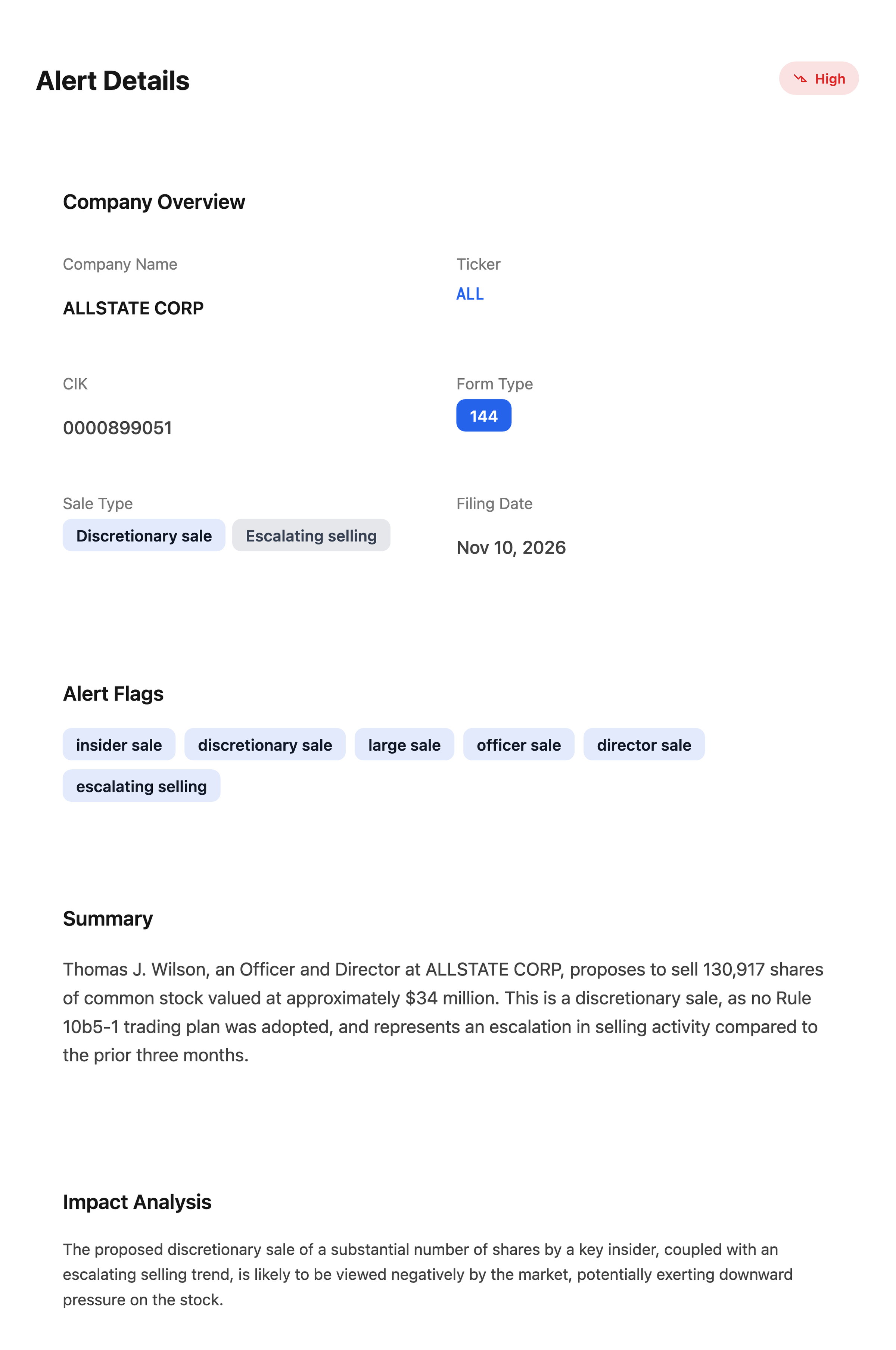
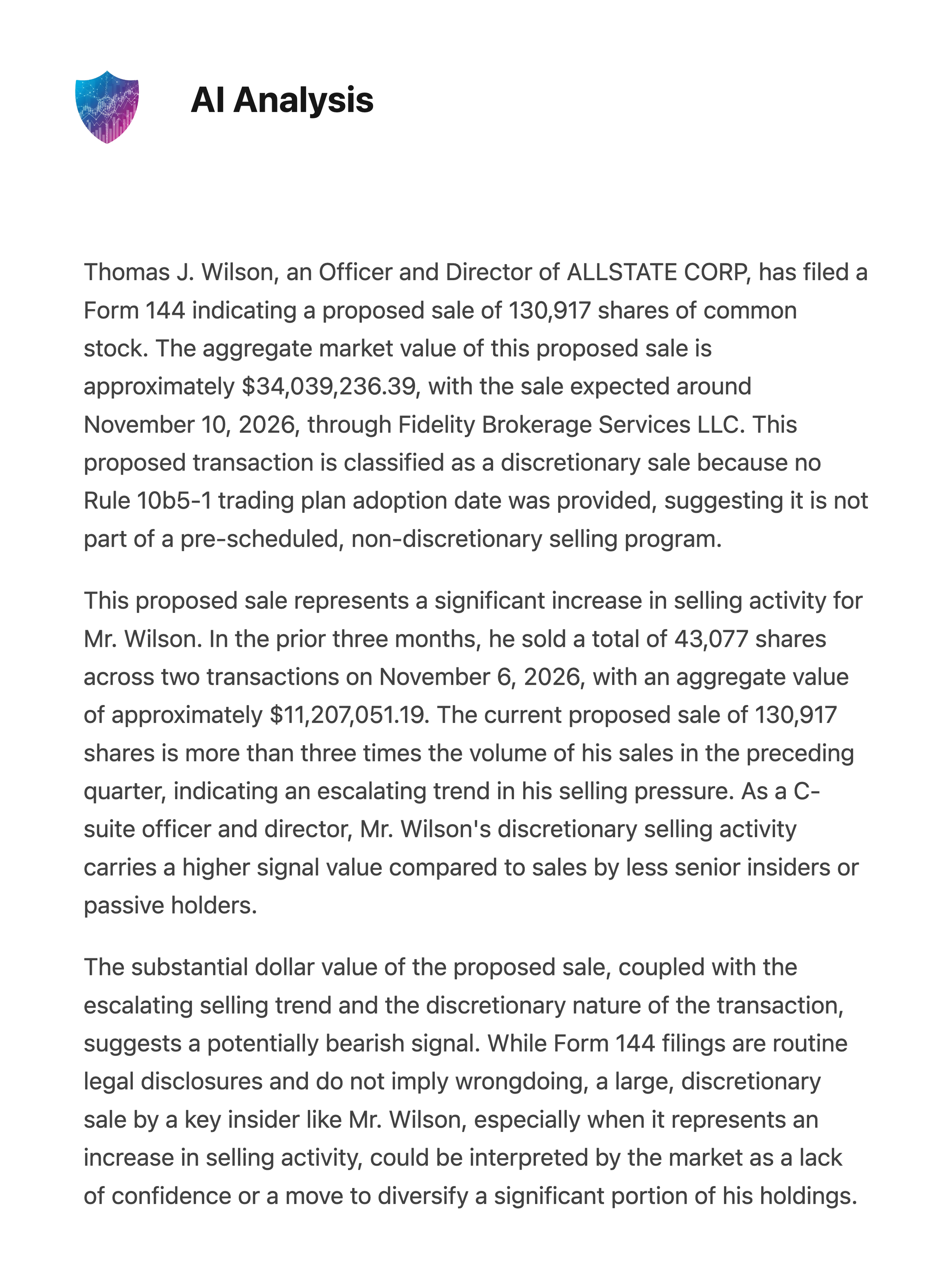
On November 10, Allstate Chairman, President and CEO Tom Wilson filed a Form 144 to sell 130,917 shares of $ALL, valued at $34,039,236.39. The notice lists no Rule 10b5-1 plan adoption date, so this is a sale he chose to make now, not one a prearranged plan made for him. NexusAlert flagged it at High severity the day it posted.
The headlines told a different, smaller story. The insider wires covered Wilson’s November 6 sale of 43,077 shares for about $11.2 million. The $34 million notice is the bigger number, and it landed four days later.
What the filings say
The story starts with a Form 4. On November 6, Wilson exercised 248,447 employee stock options at a strike price of $78.35. Those options were held in two accounts named TJW Options LLC 2017 Series, became exercisable in February 2020 and expire on February 9, 2027. Allstate stock was trading around $260.
Three things happened to those 248,447 shares. Allstate withheld 74,453 of them, worth about $19.5 million, to pay the exercise price. Wilson sold 43,077 on the open market the same day for about $11.2 million. That left exactly 79,433 plus 51,484 shares, or 130,917, sitting in the two option accounts.
The November 10 Form 144 covers those same 130,917 shares, sold through Fidelity, with the remarks noting they are “included in today’s sale.” Put together, Wilson is turning the entire option grant into cash: about $45 million of stock sold or noticed for sale across the two days, on top of the shares the company kept to cover the strike price.
The misconception: “The CEO is dumping his Allstate stake”
He is not, and the filing shows it. The 74,453 withheld shares are not a sale at all. They are how the exercise price got paid, so they should never be counted as insider selling.
And the $45 million is not his whole position. The same November 6 Form 4 lists roughly 862,000 more Allstate shares that Wilson holds directly or through his 401(k), trusts and grantor retained annuity trusts (GRATs). At the $261.12 price in the NexusAlert Dossier, that is about $225 million of stock still tied to the company he runs.
The honest question: is it a red flag?
Not on its own. Options that expire in three months have to be exercised or they go to zero, and the profit on an option exercise is typically taxed as ordinary income. Selling the shares that come out of an expiring grant is the most common thing an executive does with them.
But two details keep this from being pure routine. First, no 10b5-1 plan. When Wilson filed Form 144s in December 2025 and January 2026, they cited a 10b5-1 plan adopted June 27, 2025, with 16,807 shares sold like clockwork every two weeks. This sale carries no plan date, so the timing was his call. Second, he picked his moment. The stock was near $261 after a one-year gain of more than 30 percent.
An expiring option explains why he sold. It does not explain why he chose this week.
The bigger pattern: what the Dossier adds
Allstate’s Company Dossier puts the sale next to the business. The five Company scores split sharply. Insider Conviction is 0.5 out of 10, the bottom 5 percent of companies NexusAlert scores, which matches a year of executive selling. Everything else is strong: Financial Strength 9.1 (top 9 percent), Governance 10.0 (top 7 percent), Institutional Flow 9.9 (top 1 percent) and Earnings Quality 6.4 (top 36 percent), for an overall 35.9 out of 50.
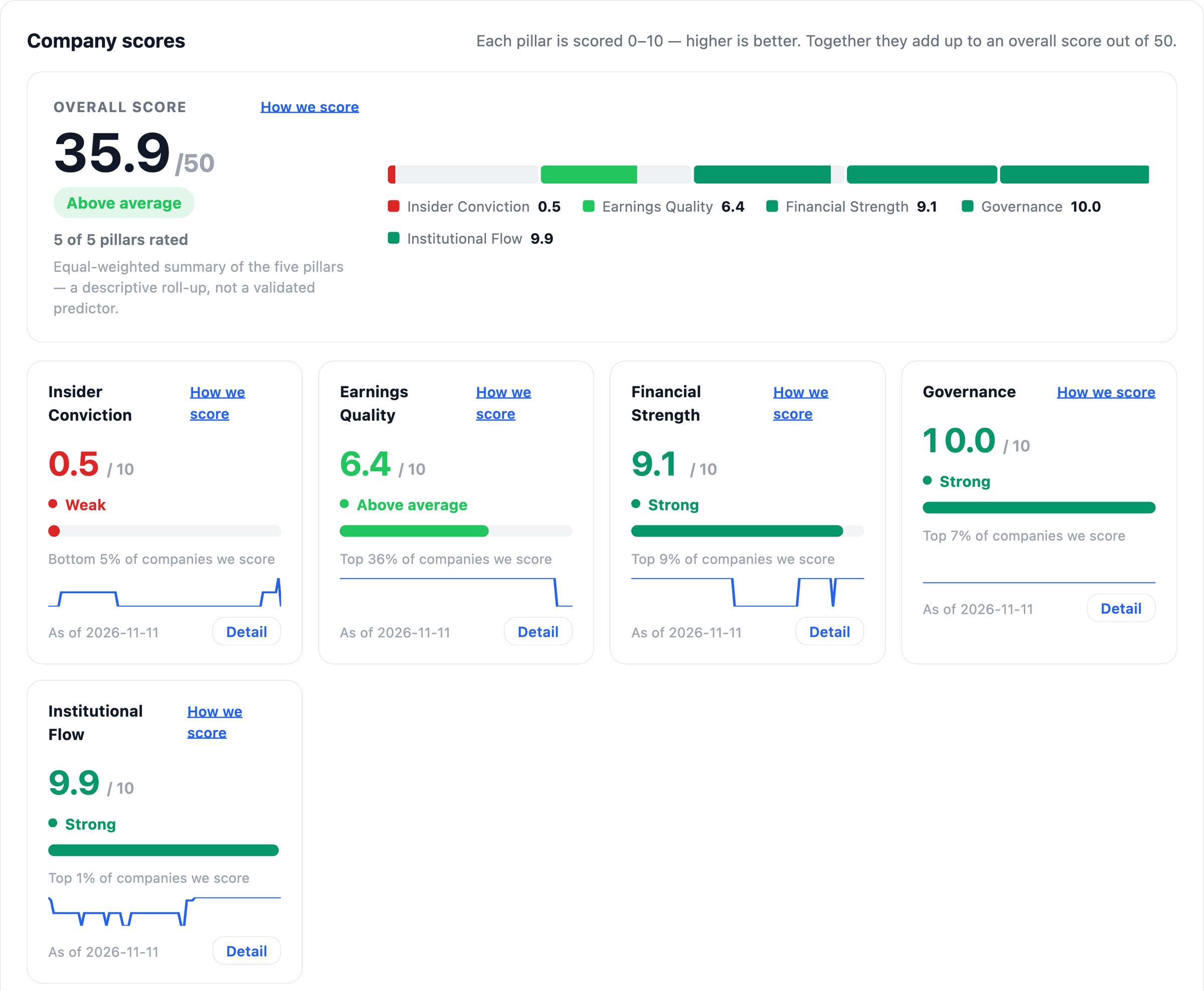
That split is the real read. Institutional money flow scores in the top 1 percent while the insiders sell, and the balance sheet scores near the top of the coverage universe. A CEO cashing out an expiring grant after a 30 percent run fits that picture better than a CEO who knows something bad is coming.
What to watch next
The Form 4 that confirms the November 10 sale is due within two business days. Watch the price and share count on it, and whether Wilson goes back to a 10b5-1 plan for his regular selling. A second discretionary sale outside an option exercise would be a different signal.
The lesson
One insider sale is noise. The structure around it is the signal. The headline said “CEO sells $11 million.” The filings said an expiring option, a withheld block that was never a sale, a $34 million follow-on with no plan, and $225 million still held. Read the whole filing, not the headline. NexusAlert reads it for you the day it posts.
Create a free NexusAlert account to get Form 144 and Form 4 alerts on any ticker you follow, before the headlines catch up.
This post analyzes public filings and is not investment advice.
Sources
- Allstate Form 144 filed November 10, 2026, Thomas J. Wilson, 130,917 shares (SEC EDGAR)
- Allstate Form 144 filed January 2, 2026, 10b5-1 plan adopted June 27, 2025 (SEC EDGAR)
- Allstate Form 144 notice dated December 1, 2025 (Allstate Investor Relations)
- Allstate CEO Thomas Wilson sells $11.2 million in company stock, with option exercise details and one-year return (Investing.com)
- Form 144 ALLSTATE CORP filed by Wilson Thomas J (StreetInsider)
- Allstate Company Dossier (NexusAlert)
Prefer to own it outright? NexusAlert lifetime access is available for a one-time payment of $299 — no subscription, no recurring charges, all future Pro features included. Learn more →